Apple Macbook Air 13


Here is one of the pictures featuring the Apple Macbook Air 13. Numerous images associated with the Apple Macbook Air 13 can be utilized as your point of reference. Below, you'll find some additional pictures related to the Apple Macbook Air 13.

Showing posts sorted by relevance for query Apple Macbook Air 13. Sort by date Show all posts

Dell XPS 13 Review: Dell XPS 13


Dell xps 13 2 in 1 9310 dell review dell xps 13 review 2021 dell xps 13 review 9305 dell xps 13 review reddit dell xps 13 review 2012 dell xps 13 plus review dell xps 13 dell xps 13 9370 dell xps dell xps 17 dell xps 8940 dell xps 15 9520
Dell XPS 13 review: Dell XPS 13


Dell XPS 13 review: Dell XPS 13

The first Very Important Laptop of 2012 has arrived, in the form of the new Dell XPS 13. This is Dell's first ultrabook (an Intel designation for laptops with certain specs--essentially a Windows MacBook Air), and even though the company is a little late to that particular game, the XPS 13 nails a lot of what makes for a good ultrabook experience.

At $999 for a 128GB solid-state drive (SSD) and Intel Core i5-2467M CPU, the XPS 13 is reasonably priced, although Hewlett-Packard, Toshiba, and others offer similar specs for $100 or so less. Working in Dell's favor are the system's excellent build quality--the body is a mix of aluminum, magnesium alloy, and carbon fiber--and its smaller footprint. It's not quite a 13-inch laptop in an 11-inch body, but it's in the ballpark.

The backlit keyboard, large touch pad, edge-to-edge Gorilla Glass over the display, and the small footprint all add up to an impressive package. If the battery life and screen (both image quality and resolution) were better, it could be the best of the current ultrabooks. As it is, it's still in the running, but it's not a blowout win.

Price as reviewed $999
Processor 1.6GHz Intel Core i5-2467M
Memory 4GB, 1,333MHz DDR3
Hard drive 128GB SSD
Chipset Intel UM67
Graphics Intel HD3000
Operating system Windows 7 Home Premium (64-bit)
Dimensions (WD) 12.4x8.1 inches
Height 0.24-0.71 inch
Screen size (diagonal) 13.3 inches
System weight / Weight with AC adapter 3 pounds / 3.6 pounds
Category 13-inch

The first thing you notice about the XPS 13 is how small it looks. Dell claims this is a 13-inch screen in a chassis more like an 11-inch laptop's. In reality, it's not exactly that compact, but it is a bit smaller than other 13-inch ultrabooks. It falls right between the 11-inch MacBook Air and 13-inch MacBook Air. Although, with the bigger screen and edge-to-edge Gorilla Glass, it feels dense. When you pick it up for the first time, it's heavier than you expect.

And the comparison to the MacBook Air is an apt one, as this is the most Air-like ultrabook to date, more so even than the Asus Zenbook UX31. If not for the circular Dell logo replacing the circular Apple logo on the back, you'd be hard-pressed to tell the difference with the lid closed.

The bottom surface is more distinctive. Two raised channels allow heat to escape from a bottom vent, but also raise the entire system by a few millimeters. It's not as nice-looking as the all-over smooth body of the Air.

The keyboard is shallow but very pleasant to use, with a soft, clack-free touch. The backlight is bright, but not overpowering against the all-black keys and keyboard tray. Something must be said for the all-over use of matte black as well. The less glossy my laptop interior is, the happier I am. The glass touch pad is large, with a drag-free matte surface, but the tap sensitivity needed to be cranked up a bit for it to be usable, and even then it still acted a bit wonky, though arguably not worse than most other Windows laptop touch pads.

One disappointment is the screen itself. While the 1,366x768-pixel native resolution is what you'll find in most 13-inch laptops, we've seen 1,600x900-pixel models recently, and the 13-inch MacBook Air has a 1,440x900-pixel display (admittedly starting at $300 more). Edge-to-edge glass is always a look that I like, but the off-axis viewing on this display is poor. Dell is purportedly going to offer a higher-resolution screen in the near future, so hopefully it'll be an improvement.


Dell XPS 13 Average for category [13-inch]
Video DisplayPort VGA plus HDMI or DisplayPort
Audio Stereo speakers, headphone jack Stereo speakers, headphone/microphone jacks
Data 1 USB 2.0, 1 USB 3.0 2 USB 2.0, 1 USB 3.0, SD card reader
Networking 802.11n Wi-Fi, Bluetooth Ethernet, 802.11n Wi-Fi, Bluetooth, optional mobile broadband
Optical drive None DVD burner

One thing that gives me pause is the lack of an SD card slot--the 13-inch Air and most 13-inch ultrabooks have one. Many times, a large SD card is an easy and inexpensive way to temporarily boost the capacity of a laptop with SSD storage. You may also be bothered by the choice of DisplayPort instead of HDMI for the video output, which just isn't as universally useful. Sure, an adapter can connect the two, but even in corporate settings, you're more likely to run into HDMI (or even VGA) than DisplayPort--for now, at least.

The base $999 configuration, with a 1.6GHz Core i5, 4GB of RAM, and a 128GB SSD, should be fine for most. For $1,299, the SSD gets bumped up to 256GB--more than Apple will give you at that price--and a faster Core i7 CPU gets added to the 256GB SSD at $1,499.

An IT-focused version of the XPS 13 will offer corporate-friendly extras such as a TPM chip, BitLocker data encryption, and static images (for companywide IT groups that require systems to be identical, even if purchased many months apart). A casual consumer won't need to worry about these features.

The included Intel Core i5-2467M CPU is in the same category as the Core i5-2450 or i5-2430 processors found in most current mainstream 13-inch or midsize laptops. The XPS 13 performed in the middle of the pack when compared with other similar laptops--overall differences were slight. In anecdotal use, the XPS 13 felt fast and lag-free, and is more than powerful enough for everyday multitasking.

Only the Intel HD 3000 graphics hold it back in terms of performance, as you won't be able to play much beyond casual and social games; but neither will you be able to on any other current ultrabook.

Juice box
Dell XPS 13 Avg watts/hour
Off (60%) 0.28
Sleep (10%) 0.78
Idle (25%) 5.06
Load (05%) 29.72
Raw kWh number 26.25
Annual power consumption cost $2.98

Annual power consumption cost

HP Folio 13

$2.80

Apple MacBook Air 13.3-inch (Summer 2011)

$2.87

Dell XPS 13

$2.98

Acer Aspire S3-951-6646

$3.14

Lenovo IdeaPad U300s

$3.75

Asus UX31E-DH52

$4

The Dell XPS 13 ran for 4 hours and 52 minutes in our video playback battery drain test. That's not terrible, but far from what you'll need for a full day's work away from an outlet, and less than many ultrabook-style laptops give you. The current 13-inch MacBook Air ran for 6 hours and 46 minutes on the same test, and HP's excellent Folio 13 ran for an hour longer than the XPS 13.

As the XPS 13 hasn't landed on Dell's Web site as of this writing, we'll have to update the details on exact warranty options and upgrades when that information is available. On previous XPS laptops, Dell has offered a default one-year mail-in service warranty, and Dell's site offers 24-7 toll-free phone service and Web support, including documentation and software drivers that are easy to find.

The Dell XPS 13 misses a few things on the path to ultrabook greatness, but it also passes a very important test. Everyone in the office who has seen and picked it up has come away impressed, and that first impression at least shows that this system can cut through the crowded field of slim 13-inch laptops. With a better battery and screen, and a few other tweaks, it would be an easy go-to ultrabook recommendation.

Multimedia multitasking test (in seconds)

(Shorter bars indicate better performance)

Apple MacBook Air 13.3-inch (Summer 2011)
233

Asus UX31E-DH52

670

Lenovo IdeaPad U300s

701

Dell XPS 13

763

HP Folio 13

776

Acer Aspire S3-951-6646

782

Adobe Photoshop CS5 image-processing test (in seconds)

(Shorter bars indicate better performance)

Asus UX31E-DH52
192

Lenovo IdeaPad U300s

194

Dell XPS 13

215

HP Folio 13

219

Acer Aspire S3-951-6646

222

Apple MacBook Air 13.3-inch (Summer 2011)

224

Apple iTunes encoding test (in seconds)

(Shorter bars indicate better performance)

Apple MacBook Air 13.3-inch (Summer 2011)
98

Asus UX31E-DH52

130

HP Folio 13

153

Dell XPS 13

154

Acer Aspire S3-951-6646

156

Lenovo IdeaPad U300s

194

Video playback battery drain test (in minutes)

(Longer bars indicate better performance)

Apple MacBook Air 13.3-inch (Summer 2011)
406

HP Folio 13

358

Lenovo IdeaPad U300s

314

Dell XPS 13

292

Asus UX31E-DH52

285

Acer Aspire S3-951-6646

243

Find out more about how we test laptops.

System configurations:

Dell XPS 13
Windows 7 Home Premium (64-bit) w/ SP1; 1.6GHz Intel Core i5-2467M; 4GB DDR3 SDRAM 1,333MHz; 64MB (Dedicated) Intel HD 3000; 128GB Samsung SSD

Asus UX31E-DH52
Windows 7 Home Premium (64-bit) w/ SP1; 1.7GHz Intel Core i5-2557M; 4GB DDR3 SDRAM 1,333MHz; 64MB(Dedicated) Intel GMA HD; 128GB SSD

Lenovo IdeaPad U300s
Windows 7 Home Premium (64-bit) w/ SP1; 1.8GHz Intel Core i7-2677M; 4GB DDR3 SDRAM 1,333MHz; 64MB (Dedicated) Intel HD 3000; 256GB JMicron 616 SSD

Acer Aspire S3-951-6646
Windows 7 Home Premium (64-bit) w/ SP1; 1.6GHz Intel Core i5-2467M; 4GB DDR3 SDRAM 1,333MHz; 128MB (Shared) Intel HD 3000; 320GB Hitachi 5,400rpm + 20GB SSD

HP Folio 13
Windows 7 Professional (64-bit) w/ SP1; 1.6GHz Intel Core i5-2467M; 4GB DDR3 SDRAM 1,333MHz; 64MB (Dedicated) Intel HD 3000; 128GB Samsung SSD

Apple MacBook Air 13.3-inch (Summer 2011)
OS X 10.7 Lion; 1.7GHz Intel Core i5-2557M; 4GB DDR3 SDRAM 1,333MHz; 384MB (Shared) Intel HD 3000; 128GB Apple SSD


Source

Apple MacBook Pro: Hands-on With The New And Improved Magic Keyboard Version


Apple MacBook Pro: Hands-on with the new and improved Magic Keyboard version


Apple MacBook Pro: Hands-on with the new and improved Magic Keyboard version

Even if you're stuck working from home, you can still get caught by the upgrade bug. That's why I eagerly tore into the new 13-inch MacBook Pro when it landed at the socially distant, wooded retreat I've been hiding out in for the past two months. In a lot of ways, the 13-inch Pro was always the most practical MacBook to buy -- fewer compromises than the MacBook Air, less expensive and more portable than the massive 16-inch (and previously 15-inch) MacBook Pro

But, that case had been harder to make of late. Both the 16-inch Pro and 13-inch Air recently upgraded from the much-maligned butterfly-style keyboard to the newer Magic Keyboard design -- a name now used in laptops, stand-alone Mac accessories and the new iPad Pro keyboard case. Newer Intel CPUs were available in those other systems. Neither of them would dare try and charge you more than $1,000 for a measly 128GB SSD. And when Apple dropped the price on the 13-inch Air back down to $999 (yes, really -- $1,099 with the Core i5 option), the $1,299-and-up 13-inch MacBook Pro was feeling like the odd man out. 

Perhaps knowing I'd been sitting out in the woods contemplating such things, Apple has now updated the 13-inch MacBook Pro, bringing it much more in line with its other laptop offerings. Major differences from the previous model include a Magic Keyboard upgrade, new 10th-generation Intel processor options for some models and double the base storage for all. 

img-8993

In the woods, with a MacBook Pro. 

Libe Ackerman

Next to the keyboard, storage is probably the most practical change and takes the two lowest-priced models from 128GB of storage to 256GB; the midtier model from 256GB to 512GB and the high-end base configuration from 512GB to 1TB. The new top-end cap for storage is now 4TB, up from the previous 2TB. Prices for the four default configurations remain at $1,299; $1,499; $1,799 and $1,999. They start at £1,299 in the UK and AU$1,999 in Australia.

But before you buy, there are a few caveats to keep in mind. The two lowest-priced models are sticking with eighth-gen Intel CPUs. Upgrading to the 10th-gen chip is not currently an option until you hit the $1,799 level. That's the model I'm testing right now, with a 2.0GHz quad-core 10th-generation Intel Core i5 processor, 16GB of fast DDR4 RAM, a 512GB SSD and Intel Iris Pro graphics. For an extra $200, you can double the storage to 1TB. For $400, you can bump the RAM from 16GB to 32GB, currently the 13-inch MacBook upper limit (the 16-inch Pro supports up to 64GB of RAM). 

New MacBook Pro 13 configurations

Price $1,299 $1,499 $1,799 $1,999
CPU 1.4GHz quad-core 8th-generation Intel Core i5 processor 1.4GHz quad-core 8th-generation Intel Core i5 processor 2.0GHz quad-core 10th-generation Intel Core i5 processor 2.0GHz quad-core 10th-generation Intel Core i5 processor
RAM 8GB 2,133MHz LPDDR3 8GB 2,133MHz LPDDR3 16GB 3,733MHz LPDDR4X 16GB 3,733MHz LPDDR4X
Storage 256GB SSD storage 512GB SSD storage 512GB SSD storage 1TB SSD storage

In the hand, well, it looks and feels like a MacBook Pro. No noticeable physical differences, aside from the keyboard. And you'd have to have a butterfly keyboard MacBook nearby to compare and see any real difference, at least visually. Typing on it is another story. 

I have, at times over the years, not exactly defended the butterfly keyboard, but I may have occasionally pointed out that it wasn't as all-out terrible as leagues of professional internet complainers would have you believe.  Yes, I may have once written an article called "In defense of the Apple MacBook keyboard," but it was pretty tongue-in-cheek, or at least that's how I'm retconning it now. 

When I reviewed the new 13-inch MacBook Air a couple of month ago, which likewise added the new Magic Keyboard, I said:

More than anything else, the new Magic Keyboard is what makes the latest Air such a winner. Yes, it solves a problem largely of Apple's own making, but the end result is highly satisfying ... The new keyboard is positively delightful, which is not praise I offer lightly. 

My hope is now that everything Mac has access to the same great keyboard design, we can stop talking about it quite as much, except to say it is indeed quite good. The best Windows laptops have largely caught up as well (although the same can't be said for Windows touchpads) so finding a great typing experience is a lot easier than it has ever been. For something similar, I'm liking the keyboard on the 2020 Dell XPS 13 a lot as well. 

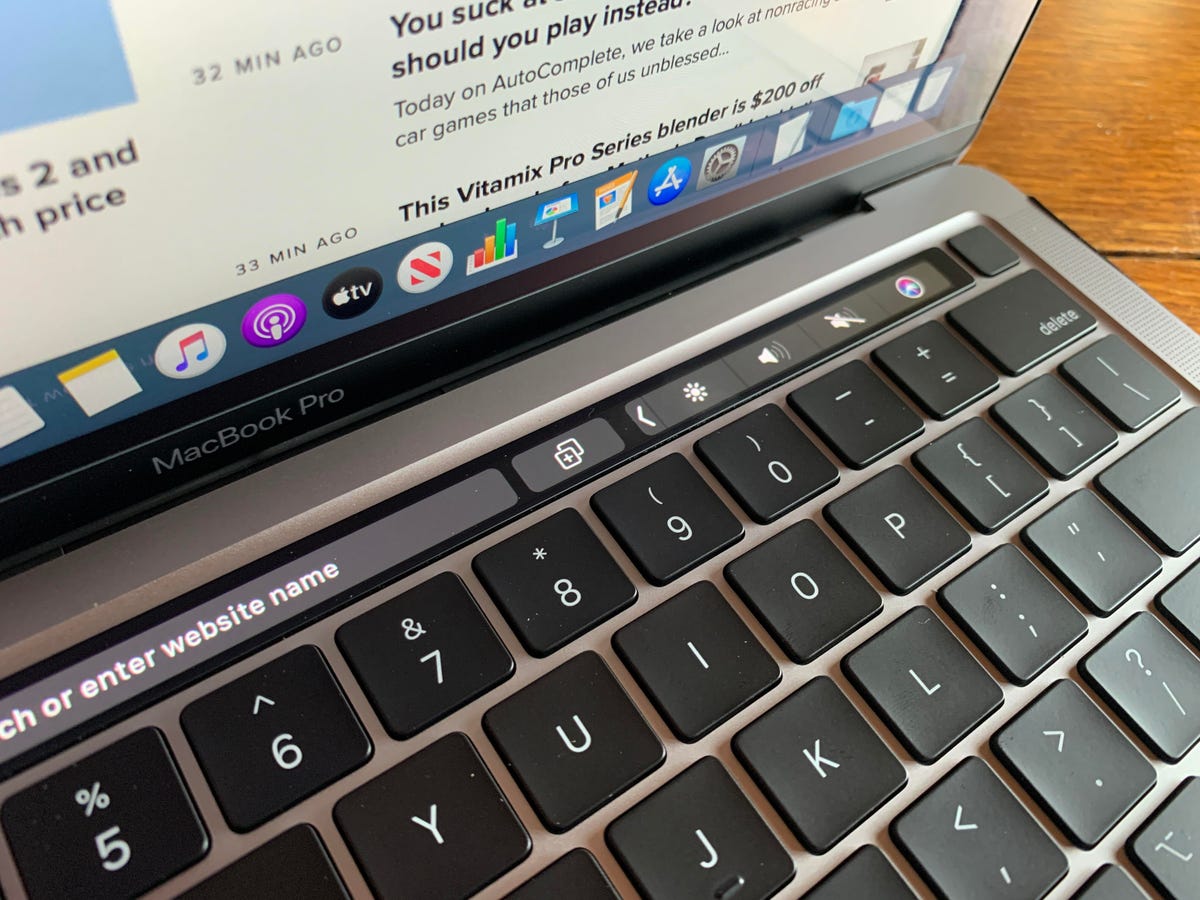
And one thing you won't find on any of those Windows laptops, or on the MacBook Air, is Apple's touch bar. This slim OLED secondary touch display still sits above the keyboard, offering contextual controls for many system tasks and specific apps. It's not a huge selling point, although I frequently use it for volume and brightness control. Many MacBook shoppers would rather have their traditional function keys back, and I can't really argue with that. The touch bar has at least evolved over time, giving up a little real estate to return the physical escape key on one side, and breaking off its very useful fingerprint reader on the other. 

img-9007

Touch bar. Still a thing. 

Dan Ackerman/CNET

This means every MacBook has been updated since last fall, although that may not be the end of the line, even near-term. Previous leaks and rumors had pointed to the 10th-gen Intel switch, but also a 14-inch display, much like the old 15-inch MacBook Pro replaced its screen with a 16-inch one, while keeping the same general footprint. That was not to be, at least not this time. Apple is also endlessly rumored to be on the verge of replacing Intel CPUs entirely with a processor of its own design. 

I'm currently testing this new 13-inch MacBook Pro and will report benchmark scores and battery life in an upcoming review. 

  • The 13-inch MacBook Pro adds 10th-gen Intel CPU options for the two highest-end configs.
  • All models double their base storage.
  • Every current MacBook now has the new Magic Keyboard design. Yes, that means the butterfly keyboard is officially dead.
  • Cost: $1,299 (£1,299, AU$1,999) and up, available to order now. 

Source

Tags:

Apple's M2 Chip Gives New MacBook Air A Speed Boost


Apple macbook air m2 chip apple m2 chip macbook macbook air m2 chip apple new m2 chip macbook with m2 chip apple m2 chip review when will apple m2 chip come out apple m2 chip comparison apple m2 chip apple m2 chip apple store
Apple's M2 Chip Gives New MacBook Air a Speed Boost


Apple's M2 Chip Gives New MacBook Air a Speed Boost

This story is part of WWDC 2022, CNET's complete coverage from and about Apple's annual developers conference.

Apple on Monday debuted the new M2 processor, a chip that improves core processing performance 18% over the M1 without hurting battery life in the company's new MacBook Air and 13-inch MacBook Pro laptops.

The 18% speed boost comes from the M2's redesigned central processing units. The processor has four fast CPU cores and four efficient cores, a hybrid approach drawn from the smartphone world. By redesigning the graphics processing units and increasing their count up to a maximum of 10 instead of eight for the M1, GPU performance is 35% faster. Overall, the new MacBook Air is 20% faster at Photoshop image editing and 38% faster at Final Cut Pro video editing, Apple said.

"We continue to have a relentless focus on power-efficient performance," Johny Srouji, Apple hardware team leader, said at the Worldwide Developers Conference.

Power efficiency is crucial to shrinking laptops since the biggest component is the battery. The new MacBook Airs take up 20% less volume but still have a long, 18-hour battery life, Apple said. The company also is using the M2 in a new 13-inch MacBook Pro.

Apple's M2 processor has large amounts of high-speed cache memory built onto the chip itself and up to 24MB of regular memory included in the chip package, two attributes that should boost performance over Apple's 2020-era M1.

Apple/Screenshots by Stephen Shankland/CNET

The M2 processor also has a significant memory boost, reaching up to 24GB instead of 16GB for the M1. Memory is important, especially as software gets bigger and laptops have years-long lifespans. M series chips build memory directly into the processor package for fast performance, but it's not upgradable.

Apple debuted the M1 at 2020's WWDC and began shipping it later that year in the earlier version of the MacBook Air. The M1, along with beefier successors called the M1 Pro, M1 Max and M1 Ultra, struck an effective balance between performance and battery life and earned strong reviews.

The M2 doubles down on the same balanced approach, offering updated processing cores that are variants of the chips at the heart of newer iPhones. The new chips continue the gradual ejection of Intel processors from the Mac family of personal computers and could enable the last Intel-powered member, the Mac Pro, to switch to Apple chips.

Designing processors is an expensive, difficult undertaking. But with the M series chips, Apple takes advantage of the A series chip design work it already does for its iPhones and iPads, then pays Taiwan Semiconductor Manufacturing Co. to build the chips on its advanced product lines. 

The M2 is built on TSMC's 5nm (5 nanometer) manufacturing process, but it's an improved version to the one used for the M1. TSMC is working on a more advanced 3nm process that should let customers squeeze in somewhat more transistors, the core electronics elements that process data on a chip.

The M2 has 20 billion transistors, a 25% increase over the M1, Apple said.

One use of the new transistors is the increased GPU count. Another is an upgraded neural engine -- a chip block used to accelerate artificial intelligence workloads. The new 16-core neural engine can perform 15.8 trillion operations per second, Apple said, a 40% speed boost.

With its own chips, Apple gets more control over the technology foundation of its products -- a principle important to Chief Executive Tim Cook. That includes both the processor itself, with specific features like AI acceleration, video encoding, and security, and the software Apple writes to take advantage of those features.

Apple's M series and A series chips are members of the Arm processor family. UK-based Arm licenses designs that companies can customize to varying degrees. Arm chips from Qualcomm, Apple, MediaTek, Samsung, Google and others power just about every smartphone for sale.

A comparison shows Apple's new M2 processor is larger than the M1.

The Apple M2 processor is significantly larger than the M1. That increases manufacturing costs. Apple raised prices for its M2-based MacBook Air laptops.

Apple/Screenshot by Stephen Shankland/CNET

Intel has struggled over most of the last decade with problems advancing its manufacturing. That stalled its progress while Apple, Qualcomm, AMD, Nvidia and other Intel rivals took advantage of TSMC's manufacturing progress.

Because Apple doesn't offer its chips to others, and because the majority of PCs use Intel processors, Intel is somewhat insulated from Apple's shift. Intel is working to modernize its manufacturing, spending tens of billions of dollars on new chipmaking fabs. Intel aims to reclaim its lead over rivals TSMC and Samsung in 2024.

Intel's newest PC processor, code-named Alder Lake, embraces the same mix of high-performance and high-efficiency CPU cores found in smartphone chips and Apple's M series chips. Future products are designed to improve GPU performance, in particular with Intel's renewed focus on high-end graphics that's designed to wean the company from reliance on AMD and Nvidia. That's important for one big market, gaming, where PCs with Intel and AMD processors are much more widely used than Macs.


Source

Your MacBook Trackpad Has An Annoying Setting You Need To Change


Your macbook trackpad has an annoying setting your very own net your macbook trackpad has an annoying setting youtube your macbook trackpad has an annoying setting your intention your macbook trackpad has an annoying setting spray your macbook trackpad has an annoying setting powder your macbook trackpad has an annoying and pointless thing your macbook trackpad has an annoying guy your macbook trackpad has an annoying chicken your macbook trackpad has an annoying song your macbook trackpad problem your macbook trackpad won t how to update your macbook pro
Your MacBook Trackpad Has an Annoying Setting You Need to Change


Your MacBook Trackpad Has an Annoying Setting You Need to Change

Having unboxed and set up many MacBooks over the past 15 years, there's one settings choice that drives me absolutely crazy. So if you're buying a new MacBook or want to make your current one a little more useful, you should try clicking a few boxes in the System Preferences menu that always make these machines much more useful. 

This trick will work in everything from the 14-inch and 16-inch MacBook Pro to the new M2 13-inch MacBook Pro to the upcoming M2 MacBook Air, as well as older MacBooks. 

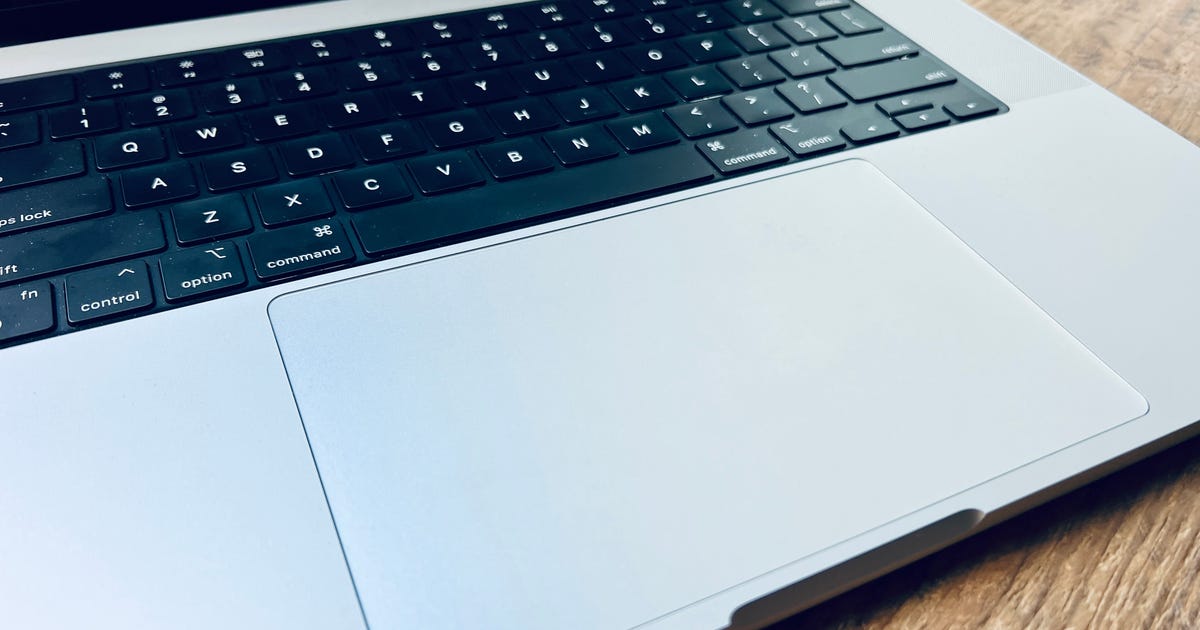
One of the best things about MacBooks has always been the huge glass trackpad, which always felt more responsive and offered more surface area than the touchpad on most Windows laptops. The difference has narrowed over the years, but it's still hard to beat a Mac trackpad. However, it makes me nuts to see (and hear) people clicking down on their touchpads to do anything. Guess what? These touchpads haven't physically depressed when clicked on for years. Instead a clever bit of haptic feedback makes it feel like you've clicked down. 

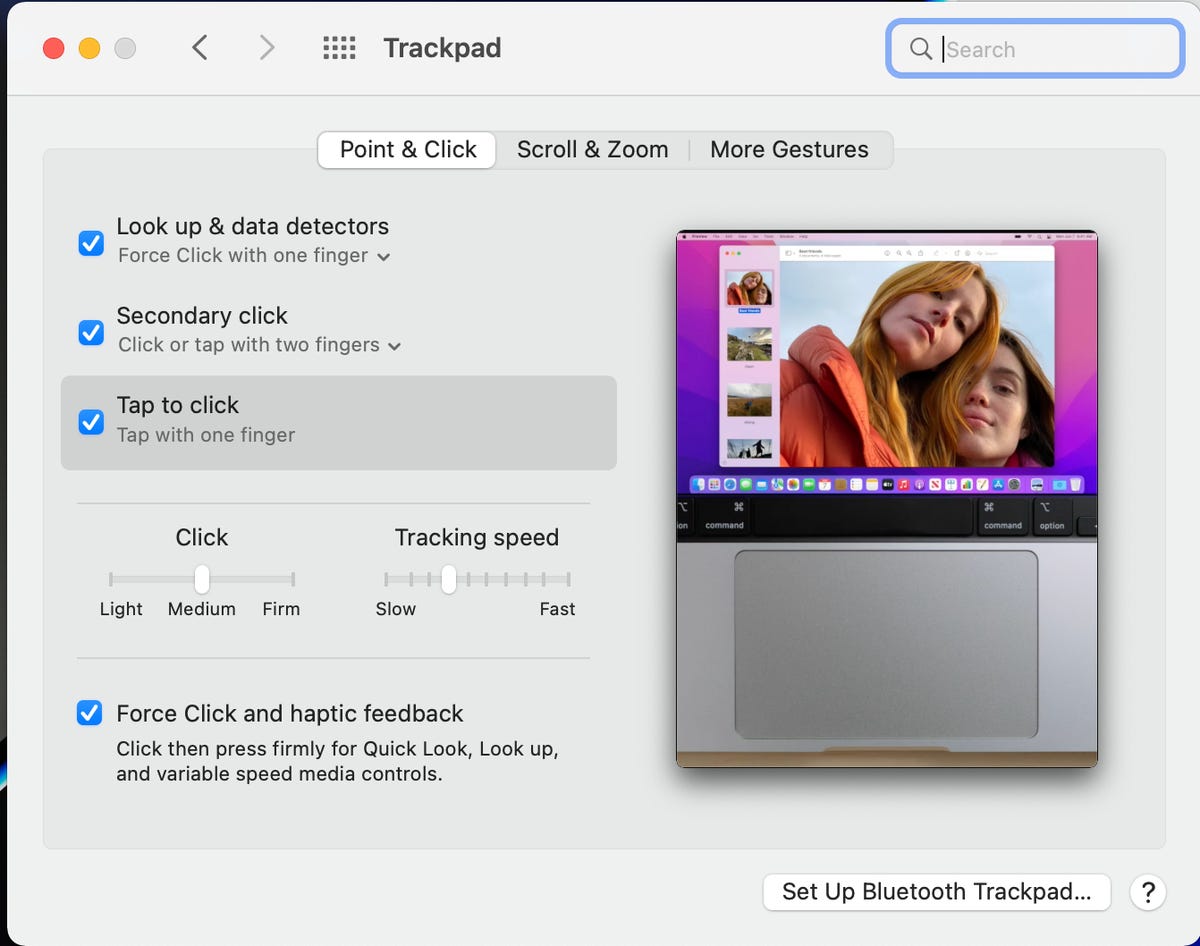
screen-shot-2021-10-28-at-12-09-57-pm.png

Turn this on, even if you're not going to use it all the time. 

Dan Ackerman/CNET

Windows laptops have long been set up for tap-to-click, which means a simple tap of your finger works the same way as a left mouse button (or ancient touchpad button) click would. A two-finger tap is the equivalent of a right mouse button click. 

Read moreMake the Most of iOS 15's Hidden Tricks

But every time I set up a new Mac, I spend several minutes vainly tapping on things with no effect, because MacOS has tap-to-click turned off by default. Why? I'm assuming it's just to make my life more difficult. Fortunately, it's easy to fix. And if you're a determined clicker and have no intention of becoming a tapper, that's OK -- change these settings and you can still click away, but now the tapping will work, too. 

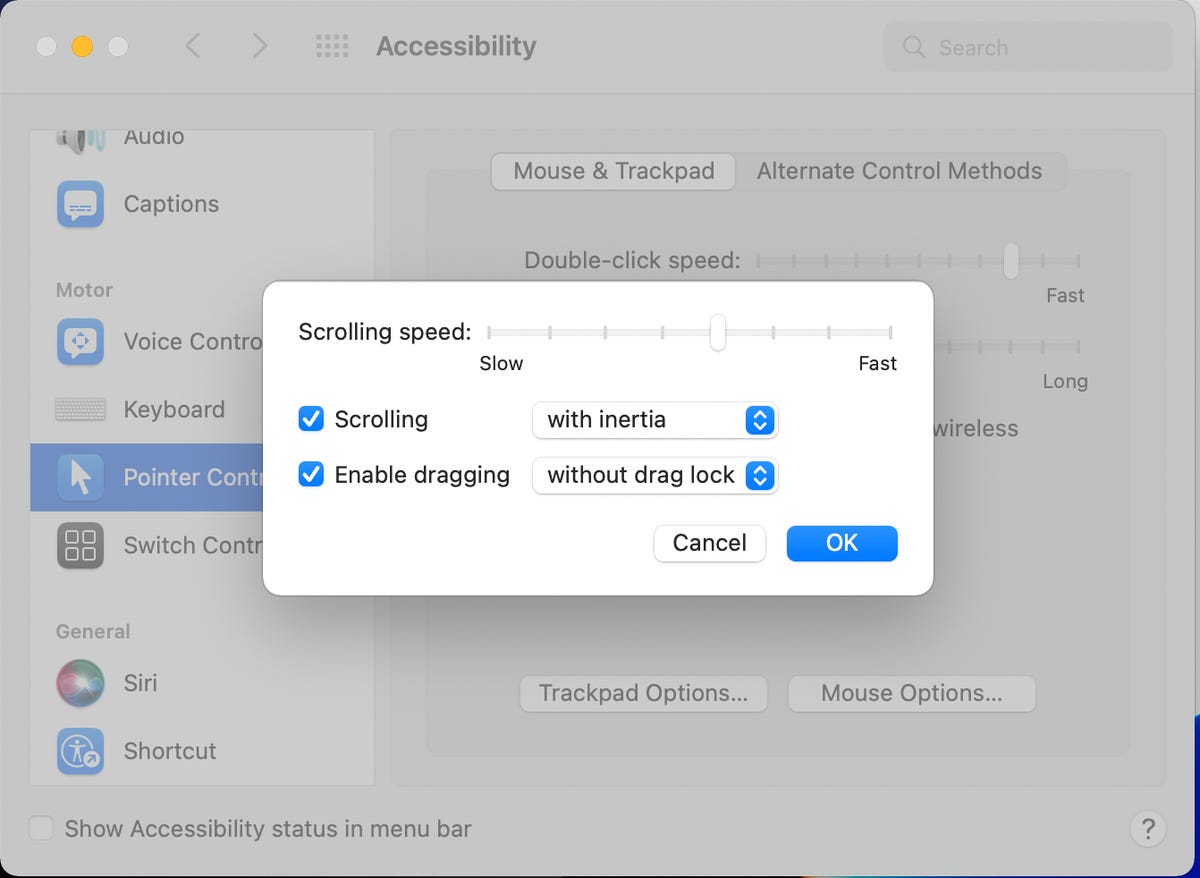
screen-shot-2021-10-28-at-12-10-28-pm.png

The super secret hidden tap-and-drag settings menu. 

Dan Ackerman/CNET

As a bonus, while we're doing this we're going to turn on both Exposé, which is a very useful multifinger gesture, and tap-and-drag, which is a much easier way to move things like folders around on the screen. 

Fix Apple's dumb default touchpad settings:

  • System Preferences > Trackpad > Point & Click > Check the checkbox for Tap to click (which is unchecked by default). 
  • System Preferences > Trackpad > More Gestures > Check the checkbox for App Exposé (fifth checkbox from the top).
  • System Preferences > Accessibility > Pointer Control > Trackpad Options > Check the checkbox for Enable dragging (without drag lock).

That's it, your MacBook is now set up in a logical way. 


Source

Search This Blog

Menu Halaman Statis

close