Apple Macbook 12


Here is one of the pictures featuring the Apple Macbook 12. Numerous images associated with the Apple Macbook 12 can be utilized as your point of reference. Below, you'll find some additional pictures related to the Apple Macbook 12.

Showing posts sorted by relevance for query Apple Macbook 12. Sort by date Show all posts

Apple MacBook Pro: Hands-on With The New And Improved Magic Keyboard Version


Apple MacBook Pro: Hands-on with the new and improved Magic Keyboard version


Apple MacBook Pro: Hands-on with the new and improved Magic Keyboard version

Even if you're stuck working from home, you can still get caught by the upgrade bug. That's why I eagerly tore into the new 13-inch MacBook Pro when it landed at the socially distant, wooded retreat I've been hiding out in for the past two months. In a lot of ways, the 13-inch Pro was always the most practical MacBook to buy -- fewer compromises than the MacBook Air, less expensive and more portable than the massive 16-inch (and previously 15-inch) MacBook Pro

But, that case had been harder to make of late. Both the 16-inch Pro and 13-inch Air recently upgraded from the much-maligned butterfly-style keyboard to the newer Magic Keyboard design -- a name now used in laptops, stand-alone Mac accessories and the new iPad Pro keyboard case. Newer Intel CPUs were available in those other systems. Neither of them would dare try and charge you more than $1,000 for a measly 128GB SSD. And when Apple dropped the price on the 13-inch Air back down to $999 (yes, really -- $1,099 with the Core i5 option), the $1,299-and-up 13-inch MacBook Pro was feeling like the odd man out. 

Perhaps knowing I'd been sitting out in the woods contemplating such things, Apple has now updated the 13-inch MacBook Pro, bringing it much more in line with its other laptop offerings. Major differences from the previous model include a Magic Keyboard upgrade, new 10th-generation Intel processor options for some models and double the base storage for all. 

img-8993

In the woods, with a MacBook Pro. 

Libe Ackerman

Next to the keyboard, storage is probably the most practical change and takes the two lowest-priced models from 128GB of storage to 256GB; the midtier model from 256GB to 512GB and the high-end base configuration from 512GB to 1TB. The new top-end cap for storage is now 4TB, up from the previous 2TB. Prices for the four default configurations remain at $1,299; $1,499; $1,799 and $1,999. They start at £1,299 in the UK and AU$1,999 in Australia.

But before you buy, there are a few caveats to keep in mind. The two lowest-priced models are sticking with eighth-gen Intel CPUs. Upgrading to the 10th-gen chip is not currently an option until you hit the $1,799 level. That's the model I'm testing right now, with a 2.0GHz quad-core 10th-generation Intel Core i5 processor, 16GB of fast DDR4 RAM, a 512GB SSD and Intel Iris Pro graphics. For an extra $200, you can double the storage to 1TB. For $400, you can bump the RAM from 16GB to 32GB, currently the 13-inch MacBook upper limit (the 16-inch Pro supports up to 64GB of RAM). 

New MacBook Pro 13 configurations

Price $1,299 $1,499 $1,799 $1,999
CPU 1.4GHz quad-core 8th-generation Intel Core i5 processor 1.4GHz quad-core 8th-generation Intel Core i5 processor 2.0GHz quad-core 10th-generation Intel Core i5 processor 2.0GHz quad-core 10th-generation Intel Core i5 processor
RAM 8GB 2,133MHz LPDDR3 8GB 2,133MHz LPDDR3 16GB 3,733MHz LPDDR4X 16GB 3,733MHz LPDDR4X
Storage 256GB SSD storage 512GB SSD storage 512GB SSD storage 1TB SSD storage

In the hand, well, it looks and feels like a MacBook Pro. No noticeable physical differences, aside from the keyboard. And you'd have to have a butterfly keyboard MacBook nearby to compare and see any real difference, at least visually. Typing on it is another story. 

I have, at times over the years, not exactly defended the butterfly keyboard, but I may have occasionally pointed out that it wasn't as all-out terrible as leagues of professional internet complainers would have you believe.  Yes, I may have once written an article called "In defense of the Apple MacBook keyboard," but it was pretty tongue-in-cheek, or at least that's how I'm retconning it now. 

When I reviewed the new 13-inch MacBook Air a couple of month ago, which likewise added the new Magic Keyboard, I said:

More than anything else, the new Magic Keyboard is what makes the latest Air such a winner. Yes, it solves a problem largely of Apple's own making, but the end result is highly satisfying ... The new keyboard is positively delightful, which is not praise I offer lightly. 

My hope is now that everything Mac has access to the same great keyboard design, we can stop talking about it quite as much, except to say it is indeed quite good. The best Windows laptops have largely caught up as well (although the same can't be said for Windows touchpads) so finding a great typing experience is a lot easier than it has ever been. For something similar, I'm liking the keyboard on the 2020 Dell XPS 13 a lot as well. 

And one thing you won't find on any of those Windows laptops, or on the MacBook Air, is Apple's touch bar. This slim OLED secondary touch display still sits above the keyboard, offering contextual controls for many system tasks and specific apps. It's not a huge selling point, although I frequently use it for volume and brightness control. Many MacBook shoppers would rather have their traditional function keys back, and I can't really argue with that. The touch bar has at least evolved over time, giving up a little real estate to return the physical escape key on one side, and breaking off its very useful fingerprint reader on the other. 
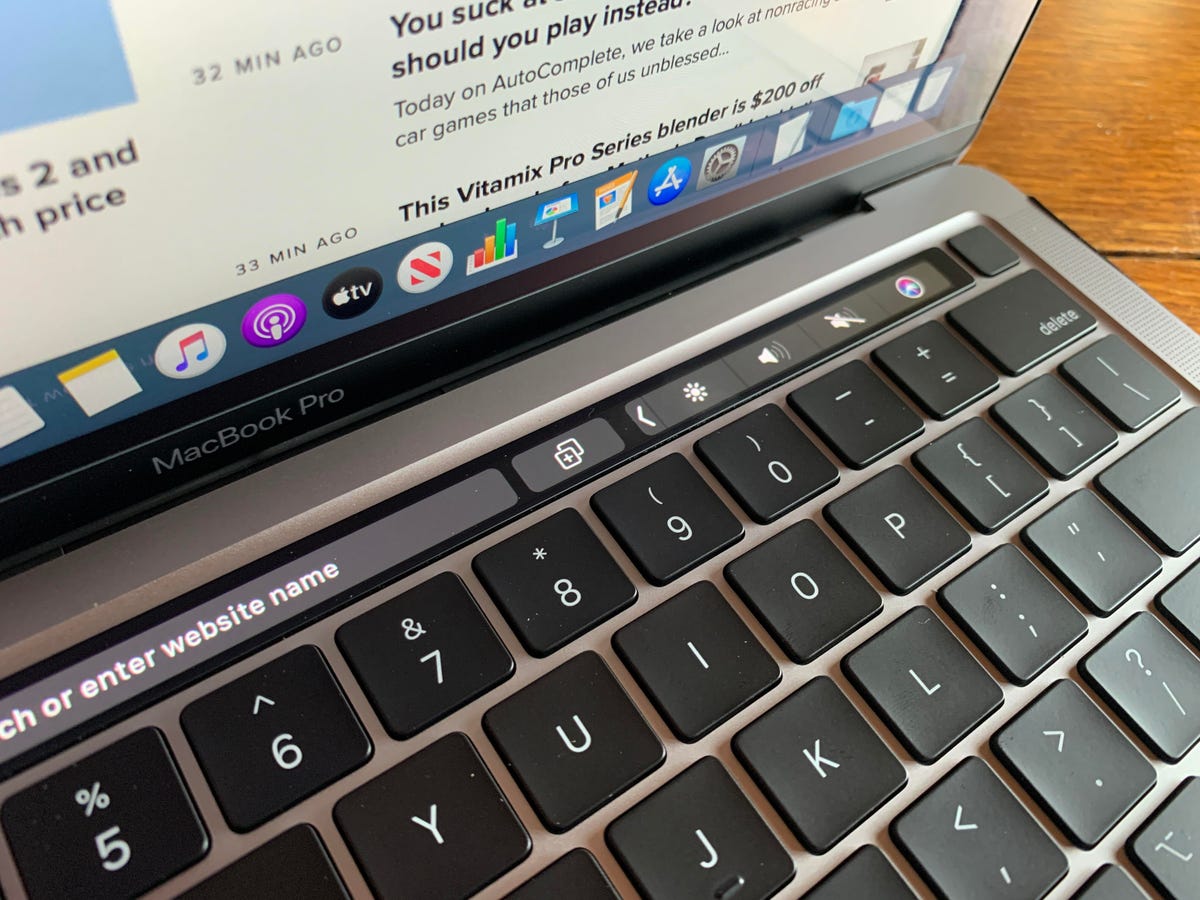
img-9007

Touch bar. Still a thing. 

Dan Ackerman/CNET

This means every MacBook has been updated since last fall, although that may not be the end of the line, even near-term. Previous leaks and rumors had pointed to the 10th-gen Intel switch, but also a 14-inch display, much like the old 15-inch MacBook Pro replaced its screen with a 16-inch one, while keeping the same general footprint. That was not to be, at least not this time. Apple is also endlessly rumored to be on the verge of replacing Intel CPUs entirely with a processor of its own design. 

I'm currently testing this new 13-inch MacBook Pro and will report benchmark scores and battery life in an upcoming review. 

  • The 13-inch MacBook Pro adds 10th-gen Intel CPU options for the two highest-end configs.
  • All models double their base storage.
  • Every current MacBook now has the new Magic Keyboard design. Yes, that means the butterfly keyboard is officially dead.
  • Cost: $1,299 (£1,299, AU$1,999) and up, available to order now. 

Source
Tags:

How The New Mac Studio Works For This Content Creator


Apple mac studio and studio display what is the mac studio new mac studio display apple mac studio and studio display the new mac studio create ios app on new visual studio mac new mac studio apple m1 ultra chip 1tb new macbook how much is the new grand big mac how the news took over reality how the heart works
How the New Mac Studio Works for This Content Creator


How the New Mac Studio Works for This Content Creator

The new Mac Studio desktop from Apple is geared toward a very specific demographic. It's right in the name: "Studio." Apple designed the machine from the inside out to cater to creators and their creative workspaces. 

As a long-time content creator, I wanted to see how the new Mac Studio and the companion 27-inch Studio Display related to my current setup and workflow, especially as this is Apple's least expensive pro desktop, now that the iMac Pro is no more. 

Read more: Apple Mac Studio review 

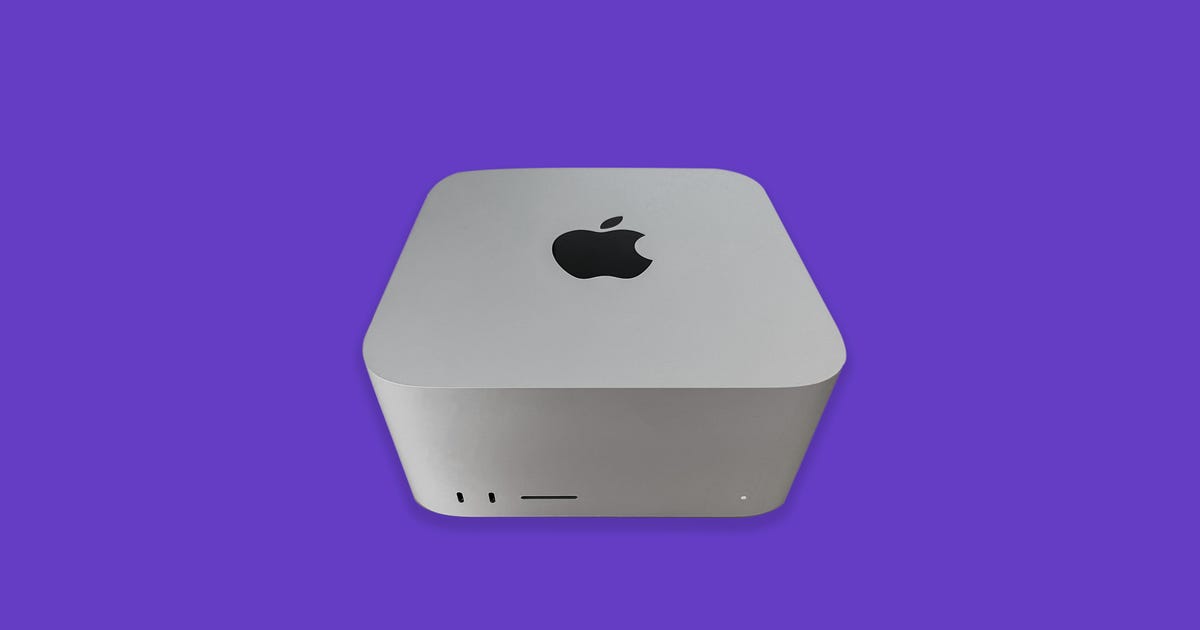
macstudio8-2

The Mac Studio and Studio Display are an aesthetically pleasing pair.

Marta Franco/CNET

Why you should listen to me 

I've been a professional video editor for nearly a decade. I worked in Hollywood for seven years editing and producing sizzle reels and pilots for TV development, worked on a video series for Spotify and edited digital content for America's Got Talent. In the three years prior to joining CNET, I ran my own tech YouTube channel where I edited nearly all my videos.

Ultimately, I'm a Final Cut Pro X editor. I've edited on all major NLEs (nonlinear editing systems) from Avid to Premiere, and I've found Final Cut to be the fastest and most efficient editing software for my needs. In fact, I'll be coming out with a video on the reasons why I choose to use it in the coming weeks.

Final Cut only supports MacOS, so when the Mac Studio was announced it definitely caught my eye. 

My at-home edit station comes first

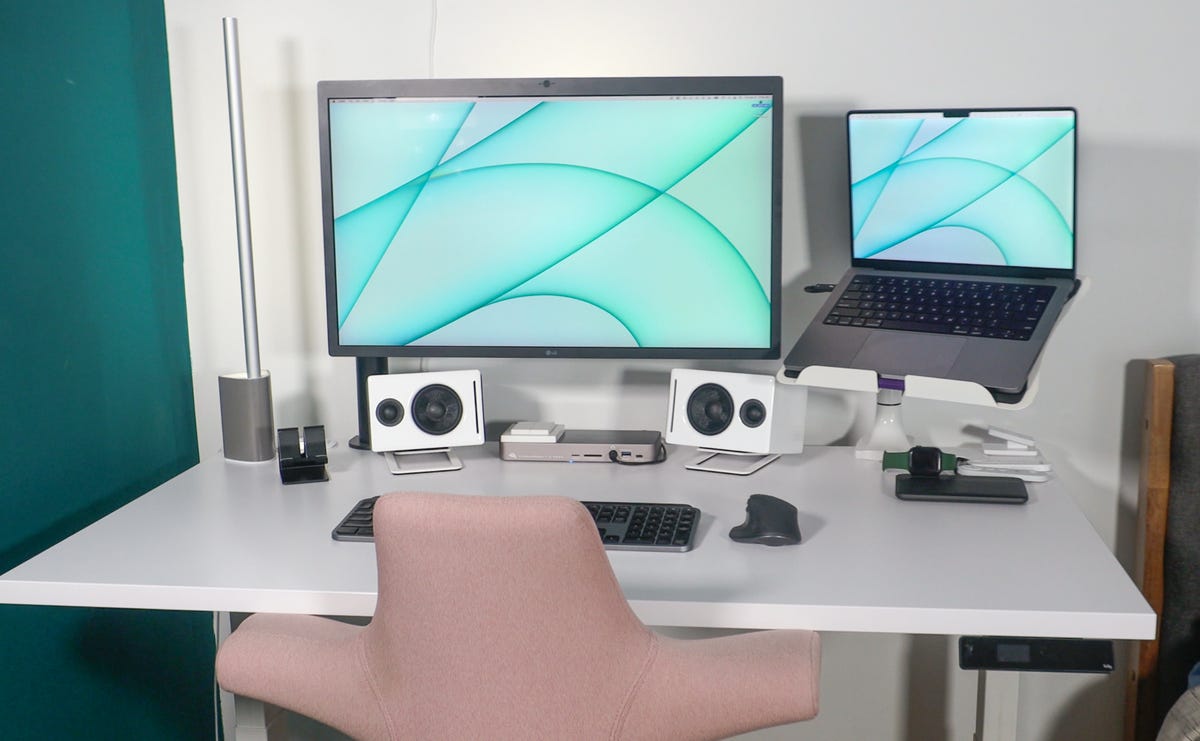
I always prioritize my at-home video-editing setup because it's where I edit most. I've built an ideal workstation: a standing desk, an ergonomic chair, a large 5K monitor and a nice set of speakers to blast my edits and easily mix projects.

My current setup consists of a 2021 14-inch MacBook Pro with the M1 Pro chip. It's connected to a 27-inch LG Ultrafine 5K monitor, and I'm using a Thunderbolt 3 dock to connect all my devices to my laptop with a single cable.

screen-shot-2022-03-31-at-12-56-31-pm

My editing workstation at home is powered by the M1 Pro 14-inch MacBook Pro.

Justin Eastzer/CNET

I purchased the 14-inch when it was first released in late 2021, and at the time it felt like my best option. An Intel-powered Mac Pro desktop would have been overkill for my editing needs, not to mention way too expensive for my budget. Had the Mac Studio come out alongside the new MacBook Pros, I most likely would have opted to go for that instead.

The M1 Pro 14-inch cost about $2,500 (with a 1TB storage upgrade). The base model of the Mac Studio, which has the more powerful M1 Max chip, starts at $2,000 and would cost another $200 for the same 1TB upgrade. 

That's a significant price difference, and the fact that I already own a great 5K display, keyboard and mouse means it wouldn't require a lot of extra purchases. It would have been an easy decision to grab a Mac Studio for my home office and use the older 16-inch MacBook Pro (2016) I already owned as an on-the-go editing system.

Now, if you don't already own a monitor, then the Mac Studio may not be as much of a deal as I find it to be. If the purchase of a monitor isn't a deal-breaker, there's the $1,600-and-up Studio Display, but there are less-expensive options as well.

macstudio5

Editing unrendered footage on Final Cut Pro X with the Mac Studio felt smooth and responsive.

Marta Franco/CNET

More power, similar price

Most of the sizzle reels I used to edit use ripped 1080p footage plus some multilayered graphics, so I'm not what you would call a "power user." My tech videos are shot in 4K, with two camera angles at most and some simple graphics. Both of these workflows run just fine in Final Cut running at "Better Quality" with my M1 Pro 14-inch MacBook Pro. 

Taking a look at CNET's benchmarks, even at the Mac Studio's base level M1 Max, it would outperform my current, and more expensive, 14-inch laptop. On top of that, because of the Mac Studio's intricate cooling system taking up the top half of its internals, CNET's Dan Ackerman says the M1 Max performs slightly better in the Mac Studio than on the MacBook Pro.

I spent a few days editing on the M1 Max Mac Studio at the CNET office. I opened up a project in Final Cut and deleted all the cache files to see how it would run. Editing with unrendered footage and graphics felt more robust than doing it on my MacBook Pro. Final Cut reacted instantaneously to mouse and keyboard clicks, bringing a smile to my face. I was surprised by how much faster the cut played over multilayered graphics and how much faster exports finished. 

For my workflow, I don't see the need for power beyond the M1 Max -- I won't be coming close to editing the 18 streams of 8k video that the M1 Ultra claims to support. The base model would be just fine, and while I don't need the extra speed, it definitely wouldn't hurt. Faster rendering and exports will give me a lot of time back to work on other projects.

Design and desk space

At first glance it's obvious from the Mac Studio's design that it was made for creatives. At the front, there are two USB-C ports (two Thunderbolt 4s on the M1 Ultra chip model) and an SD card slot. There's also a whopping four Thunderbolt 4 ports in the back -- more than enough to connect multiple monitors and drives. Ports are back, baby! 

We saw this with the latest MacBook Pros and we see it here: Apple is putting function over form at last and bringing ports back to its devices. This seems to be a change of direction from when Jony Ive, former chief design officer of Apple, put an emphasis on design and size over ports we creatives valued.

As someone who is constantly running back and forth between shooting footage and throwing it onto my computer, the luxury of having an SD card slot right in the front is an instant win. I recreated this for my current workspace using a Thunderbolt dock -- which cost about $300 at the time. 

The Mac Studio provides the same advantages as my current Thunderbolt dock. I can connect my monitor, hard drives and speakers through the back and have a clean, wire-free desk. 

I also love its minimal design -- it's small for a pro desktop machine. There was a time when I literally packed my 5K iMac into its box and brought it with me on trips. The Mac Studio is the perfect size to throw into your carry-on or in a pelican case and use as a portable machine. Grab yourself a portable monitor and I'll see you at the Delta lounge.

macstudio7

The 27-inch Studio Display offers a large workspace for video editing.

Marta Franco/CNET

What about the Studio Display?

When The Studio Display was first announced, I was very excited, but since then my excitement has faded. It goes for $1,600, significantly less than Apple's Pro XDR Display, which starts at $5,000 and infamously adds another $1,000 for the stand. Still, I don't think the Studio Display offers enough value, especially when you compare it to other monitors on the market. 

Yes, the Studio Display includes a stand, which is a great start, but it doesn't have height adjustment by default. After sitting down for an editing session with it, it felt too low and I found myself craning my neck. I prefer to look slightly upward or directly at my monitor. Personally, I would swap the stand for the VESA mount (at no extra cost) and attach it to a monitor arm. The other option available is a stand with height adjustment, but that costs an extra $400.

That said, there are other monitors that offer nearly the same visual quality as the Studio Display at a fraction of the cost and with height adjustment included.

Read more: Apple Studio Display review

As far as 5K goes, I love my 27-inch LG Ultrafine ($1,299, also available in a 24-inch). The main differences are that the LG monitor is made of plastic and its peak brightness is 500 nits versus the 600 nits of the Studio Display. There are lots of other 4K monitors that would work just fine for me, including the Dell UltraSharp U2720Q ($600), which has almost the same specs, just at a lower resolution and a peak brightness of 320 nits.

And you may be saying, "But Justin, the Studio Display has great speakers!" That's true -- for a monitor. It has a six-speaker system, which Apple says is the highest-fidelity speaker system ever created for Mac. The speakers sound great, but as a video creator, I prefer much better sound quality in my edit bay and would still opt to use my professional monitor speakers.

Should creators buy this? 

If you're a power user, the M1 Ultra Mac Studio may be a great option. If your workflow is similar to mine, you probably don't need anything stronger than the base M1 Max model. 

If you already have a video editing laptop but are looking for your next upgrade, this could be the one to go for. Keep your older laptop as an on-the-go machine and when necessary, you can edit with low-res proxy files, then up-res them on the Mac Studio at home.

Personally, I'm happy with my current M1 Pro MacBook Pro, and I don't need a Mac Studio in addition to it just yet. If I was deciding between the two, I would probably go for the Mac Studio at home and a less-expensive MacBook Pro or MacBook Air for travel and proxy editing.


Source

Your MacBook Trackpad Has An Annoying Setting You Need To Change


Your macbook trackpad has an annoying setting your very own net your macbook trackpad has an annoying setting youtube your macbook trackpad has an annoying setting your intention your macbook trackpad has an annoying setting spray your macbook trackpad has an annoying setting powder your macbook trackpad has an annoying and pointless thing your macbook trackpad has an annoying guy your macbook trackpad has an annoying chicken your macbook trackpad has an annoying song your macbook trackpad problem your macbook trackpad won t how to update your macbook pro
Your MacBook Trackpad Has an Annoying Setting You Need to Change


Your MacBook Trackpad Has an Annoying Setting You Need to Change

Having unboxed and set up many MacBooks over the past 15 years, there's one settings choice that drives me absolutely crazy. So if you're buying a new MacBook or want to make your current one a little more useful, you should try clicking a few boxes in the System Preferences menu that always make these machines much more useful. 

This trick will work in everything from the 14-inch and 16-inch MacBook Pro to the new M2 13-inch MacBook Pro to the upcoming M2 MacBook Air, as well as older MacBooks. 

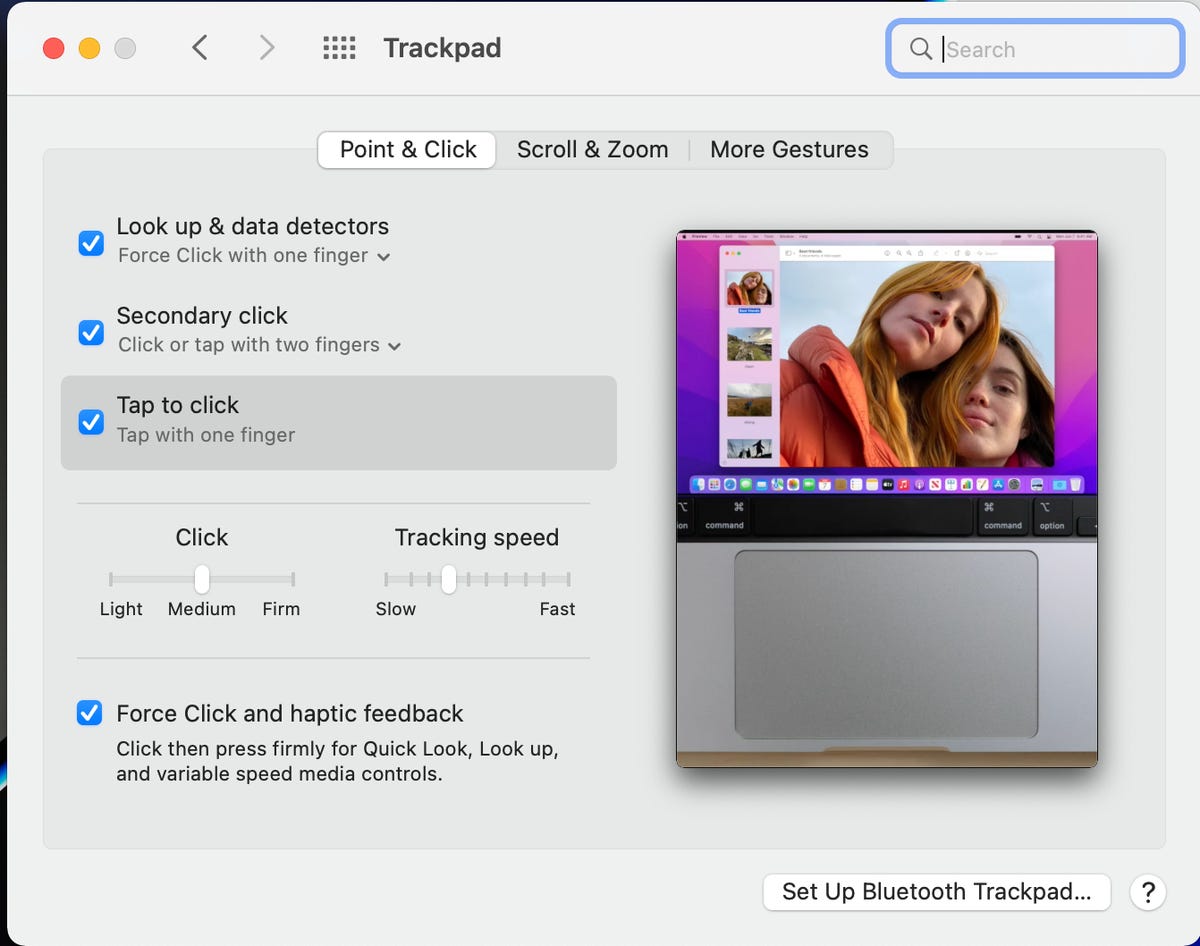
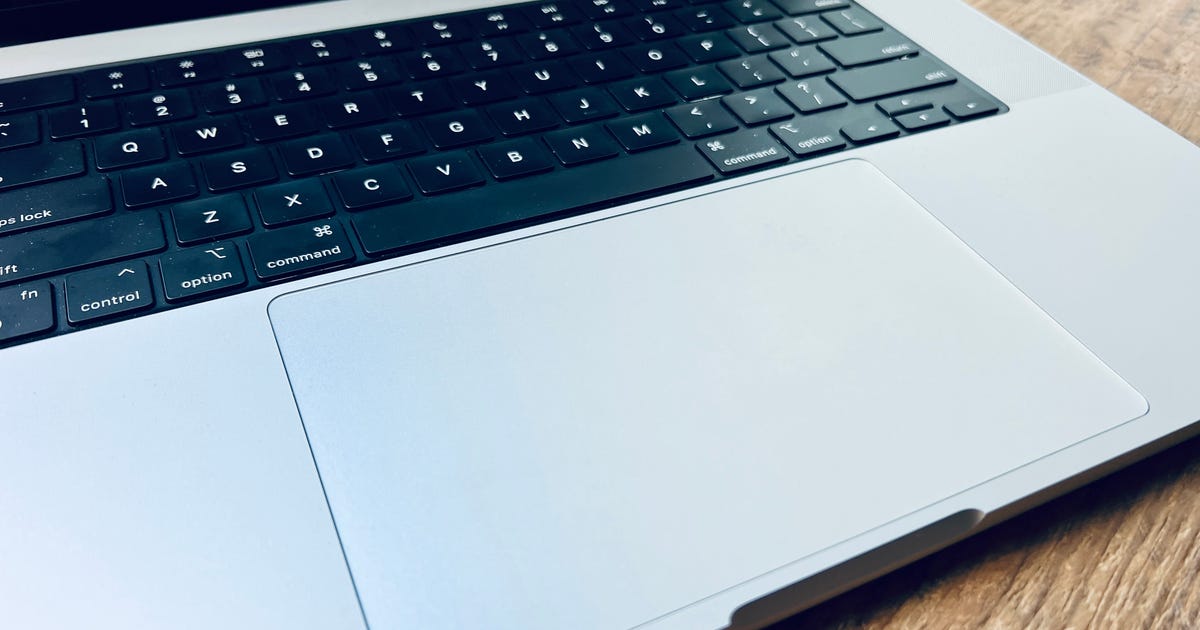
One of the best things about MacBooks has always been the huge glass trackpad, which always felt more responsive and offered more surface area than the touchpad on most Windows laptops. The difference has narrowed over the years, but it's still hard to beat a Mac trackpad. However, it makes me nuts to see (and hear) people clicking down on their touchpads to do anything. Guess what? These touchpads haven't physically depressed when clicked on for years. Instead a clever bit of haptic feedback makes it feel like you've clicked down. 

screen-shot-2021-10-28-at-12-09-57-pm.png

Turn this on, even if you're not going to use it all the time. 

Dan Ackerman/CNET

Windows laptops have long been set up for tap-to-click, which means a simple tap of your finger works the same way as a left mouse button (or ancient touchpad button) click would. A two-finger tap is the equivalent of a right mouse button click. 

Read moreMake the Most of iOS 15's Hidden Tricks

But every time I set up a new Mac, I spend several minutes vainly tapping on things with no effect, because MacOS has tap-to-click turned off by default. Why? I'm assuming it's just to make my life more difficult. Fortunately, it's easy to fix. And if you're a determined clicker and have no intention of becoming a tapper, that's OK -- change these settings and you can still click away, but now the tapping will work, too. 

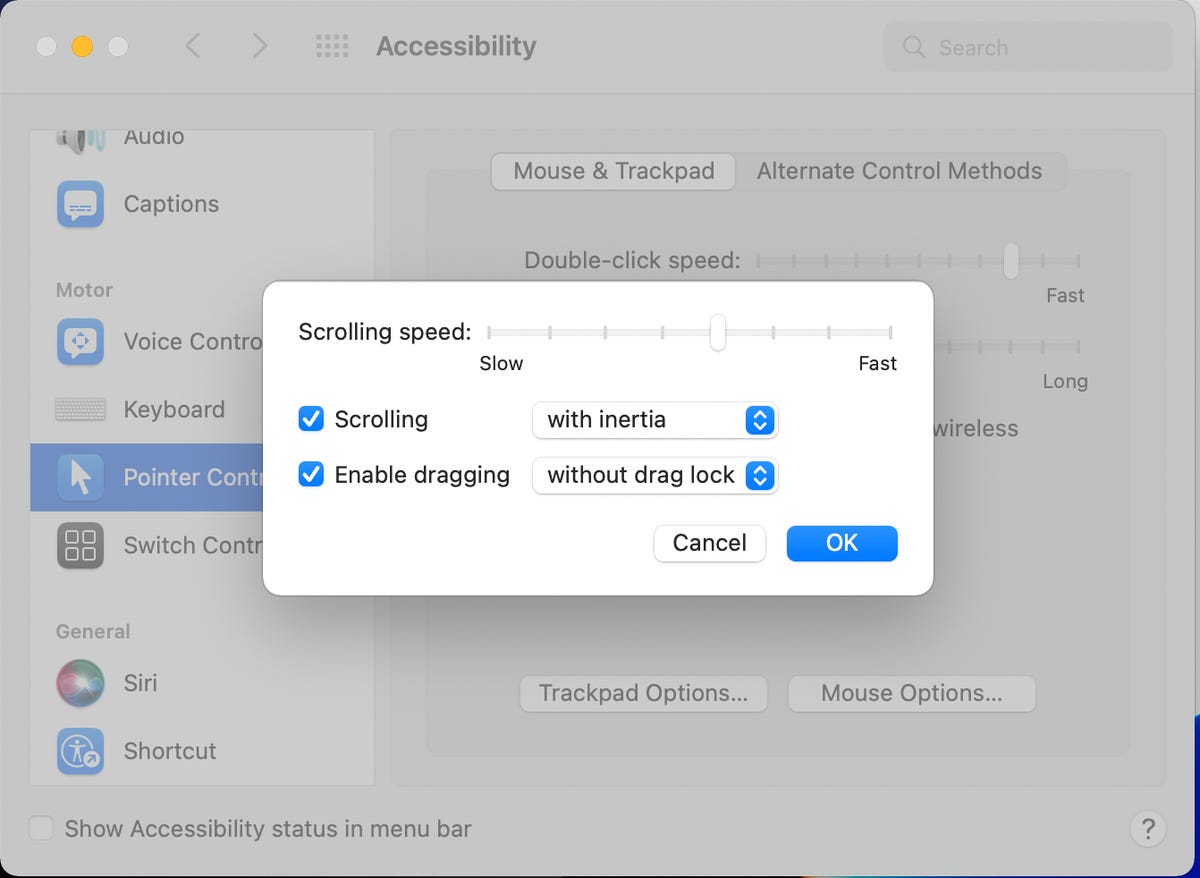
screen-shot-2021-10-28-at-12-10-28-pm.png

The super secret hidden tap-and-drag settings menu. 

Dan Ackerman/CNET

As a bonus, while we're doing this we're going to turn on both Exposé, which is a very useful multifinger gesture, and tap-and-drag, which is a much easier way to move things like folders around on the screen. 

Fix Apple's dumb default touchpad settings:

  • System Preferences > Trackpad > Point & Click > Check the checkbox for Tap to click (which is unchecked by default). 
  • System Preferences > Trackpad > More Gestures > Check the checkbox for App Exposé (fifth checkbox from the top).
  • System Preferences > Accessibility > Pointer Control > Trackpad Options > Check the checkbox for Enable dragging (without drag lock).

That's it, your MacBook is now set up in a logical way. 


Source

Search This Blog

Menu Halaman Statis

close