OLED laptop screens are worth it -- for some


OLED laptop screens are worth it -- for some

Manufacturers are all over the place when it comes to OLED price premiums; the price bump can range from $150 on an Alienware m15 or HP Spectre x360 to about $700 on a Dell XPS 15; that's because an OLED display sometimes only comes on a slightly higher configuration, so you end up paying more than you otherwise would have. And while some are only available on the higher-end models, like Razer's GeForce RTX 2080- or Quadro RTX 5000-equipped Blades, you can get OLED on Lenovo's  GTX 1650-based ThinkPad X1 Extreme and the Gigabyte Aero 15 with a GTX 1660 Ti.

So sometimes it's a low enough amount that it inspires serious consideration, but can also be high enough that it's not a no-brainer. And 15-inch OLED models are a lot more common now than they were when 13-inchers like the Alienware 13 R3 debuted in 2016, which means prices should come down. Most major manufacturers have at least one OLED configuration option in their stable.

The TL;DR: If the extra bucks are within your budget, then OLED's high contrast can make working easier on your eyes, especially if you're in bright environments. And the saturated colors are definitely pleasing to look at. But if the model you want only has an OLED option that will require spending more than you'd like just for higher contrast and brighter colors, for creative work, or specifically to watch HDR content, then you probably have some more research ahead of you. A good IPS display can be equally satisfying.

Why OLED screens are great

Since OLED produces primary colors by running electricity through organic compounds rather than layers of various materials, the colors have tighter spectral responses. The primaries can hit higher saturations, which means they can more easily produce a lot more colors. Fewer layers -- because of the lack of a backlight -- means thinner screens too.

razer-oled-spectral-power-distribution

The spectral power distribution of the Razer Blade Advanced's OLED screen. Measured with CalMAN 5 Ultimate by SpectraCal and a Konica Minolta CS-2000 spectroradiometer. Pointy is good for color accuracy.

Screenshot by Lori Grunin/CNET

And because an OLED pixel can be completely off, it can produce effectively perfect blacks, and a glowing pixel next to a black one bleeds less light, which would make the black look lighter. That means you get higher contrast. With a backlight, at best you can turn off zones of LEDs to get better blacks and control light bleed -- a technology called local dimming -- and it's never quite as contrasty. 

Varying the backlight also increases the time it takes to change a pixel's brightness, and the bigger the difference between the brightness of side-by-side pixels, the longer it takes. That lag, called "response time" is important for gaming, where pixel states need to change as fast as possible to prevent blurring where you don't want it. 

OLED's response time is as close to instantaneous as you can get with current technologies, though it's still subject to moving picture response time blur. To get even closer with an LCD you have to use TN (twisted nematic), which otherwise is a real drop in quality over other options, such as the more common IPS (in-plane switching). 

And why they're not so great

A laptop faces some significant drawbacks that a TV or phone doesn't. Such as:

  • Battery life: Since it can individually control pixel brightness values, OLED is more power efficient overall than LCD for mixed content. But for a mostly white screen, like when you're shopping on white-background Amazon or working in white-background background Google docs, firing up all those OLED pixels to a comparable brightness takes a lot more power. It does make them easier on the eyes, though, despite the battery life hit.
  • Windows: TVs and phones don't have to run Windows, either. Their displays are tightly integrated with the software and the best ones are factory calibrated with selectable color profiles. Microsoft doesn't require custom color profiles for monitors, and most end up with the Generic PnP profile, which makes assumptions that don't necessarily apply to OLED. So no matter how accurate the screen is -- and OLED can be very, very accurate -- if a video says to the graphics subsystem "give me a saturated red," the default profile shouts back, "You want red? I'LL SHOW YOU RED!!!" It doesn't know how to optimally map the broader range of colors properly or how to not crush all the detail in the dark shadows.
  • Gaming: While OLED has a fast response time, the screens only come in 4K, so you run into a fixed 60Hz refresh-rate limit; 4K laptop displays have just starting reaching refresh rates of 120Hz, but none in OLED. Depending upon the games you play, ugly frame-rate sync artifacts like tearing and stutter may overshadow the OLED's pleasing pop and fast pixel response times. RTX 2080-based systems are fast, but not fast enough for consistent 60fps 4K gameplay, And if you drop to a lower resolution for better frame rates, you'll need to use software-based vsync or cap the frame rate to get best results.

But, it's great for HDR, right? RIGHT?

If you're contemplating an OLED display because you want to watch high dynamic range content on your laptop, well, buckle up.

On one hand, OLED displays have a native wide-color gamut that covers 100% of the Apple-popularized P3 color space, necessary for decent HDR viewing and currently the de facto broadest color coverage generally available. But that's only one piece of the HDR equation, which also includes:

  • Luminance -- how bright the screen or at least a small portion of the screen can physically get as well as how bright it can get with power management settings
  • Tone mapping curve -- how the HDR content's brightness range is mapped to the narrower brightness range of the screen
  • display drivers and color management -- these inform the operating system about the capabilities of the screen and how to best map the colors of the content to the screen, along with the internal metadata stored in the display
  • Windows' interface for HDR-related settings
  • DRM and IP -- digital rights management and business-model driven intellectual property protections define what you can or can't stream in 4K and/or HDR, and not all DRM schemes are supported by Windows and vice versa
  • DirectX -- Windows' graphics programming interface, which ties all the previous pieces together

Viewing HDR content and playing games in HDR on your laptop requires that all those pieces fit together seamlessly. Under Windows, that means it takes some fiddling at best and defies solution at worst -- and not just for OLED. But in a laptop, OLED screens can't get very bright: The maximum I've measured has been just under 600 nits (the rated peak the panel is capable of), but most are under 500 nits; that's notably lower than OLED TVs.

Furthermore, given the variables listed above, simply using OLED technology isn't a sufficient condition for HDR support; at the very least, the manufacturer also has to flag to DirectX that it supports the necessary basic tone-mapping algorithm (HDR10). Without that, you don't get the Windows HDR options in the Display settings.

So, for example, some laptops fully support Windows HDR -- by "fully," I mean they send the "yes" flag to the OS for supporting streaming video, gaming and wide color gamut -- while some only support it for streaming.

The same, but different

The only manufacturer of OLED laptop panels is Samsung, and it only makes one panel at the moment. There's some variation across the executions, though not as much as I expected. Unsurprisingly, all displays cover the same gamut: over 100% of D65 P3, with the primaries (the colors at the vertices of the triangle which roughly defines the color space) reaching well beyond the edges. They also have good gray-scale tracking -- that's the ability to maintain a consistent white point across grays, and one of the most important factors when looking for a color-accurate display -- though not as good in the very dark areas.

While Samsung's panel is technically capable of reaching a maximum brightness of 600 nits, that doesn't mean the manufacturer has to drive it that high -- that's one of the ways executions can vary. For full-screen use -- you know, when you're doing laptoppy things -- they all settle around in the 380-400 nit range. But at 70% brightness, which I consider a good working level, it's closer to 200-230. While that's the same as newer LCD screens, that brightness looks a lot better on OLED because of the contrast.

Sarah Tew/CNET

Though not as robust as the color management of a mobile workstation, which generally has profiles stored in hardware, it's one of the broader systems I've seen in a prosumer laptop. For example, it comes with a Pantone-certified software profile for print work, plus four color temperature software-calibration profiles (D5800, D6000, D6500 and D6800), which you can swap among via the ControlCenter rather than using Windows' system. Oddly, the Native profile it loads is sRGB rather than just a full-monitor gamut, which is what "native" usually means in this context. 

As tested (using Portrait Displays' Calman 5 Ultimate and an X-Rite i1Display Pro), the display is very accurate for a nonpro screen. It covers 100% of DCI-P3 and about 93% of the Adobe RGB color gamuts, all the white points come within 250K of their targets, gamma is very consistently close to 2.2 above 20% gray (OLED gamma has a discontinuity roughly below 20% because it has different shadow-detail characteristics than monitors with less perfect blacks, for which a gamma of 2.2 became standard) and the gray scale is reasonably neutral. For colors, it's very accurate at maximum brightness -- I was told it was calibrated to 100% brightness for Adobe RGB and it might be even better at lower brightness levels -- and with just a little tweaking could probably hit anyone's accuracy threshold.

It hit a peak brightness of over 600 nits for a 10% window in HDR mode, though most often that will be closer to about 415 nits, and full-screen maximum brightness for normal work is around 350 nits. 

Read our Gigabyte Aero 15 OLED review.

Sarah Tew/CNET

 The Asus' OLED screen is Pantone Validated  -- it comes with two undocumented software profiles -- and uses the same Samsung panel as all the current models. It's slightly dimmer than the others at a peak full-screen brightness of about 356 nits, but offers the same full P3 gamut coverage -- only 93% of Adobe RGB, though. (It's listed as DisplayHDR 500 True Black compliant, so I'm not entirely confident of my peak brightness result of 416 nits for a 10% window. Consider my results a work in progress.) I think it uses the same touch overlay as the HP Spectre x360, because it has the same grainy look up close, and like that system it supports Windows HDR for everything. Asus' recommended brightness when working on battery is 40%, which is definitely too dim. 

Read our Asus ZenBook Pro Duo review.

Sarah Tew/CNET

I think some of the differences in the HP's screen performance -- slightly less bright with a warmer white point than the other two -- stem from the antiglare coating. The screen also has a visible dither-like pattern on white, which appears on other models, but is a little more pronounced on this model. And viewed from the side, the coating also produces faint rainbows.

But that coating makes looking at the screen a lot more pleasant than the mirror-like surface of the Razer. The battery life is also relatively good (for a 4K laptop), lasting 8.6 hours. Our tests don't use a lot of white screens, however.

The opportunity to watch videos side-by-side on the OLED and non-OLED HPs was educational: I learned the non-OLED display was a lot better than I thought. Standard definition video looked more saturated and contrasty on the OLED, but it also crushed the blacks and pushed reds to a disturbing degree. Skin tones were not great. 

HDR video streaming as SDR to the LCD sometimes looked better than the same content streaming as HDR to the OLED, which had muddy shadows.

Though the laptop supports HDR for games, the MX150 can't really run any games that support HDR. (Though HDR by itself shouldn't impact performance, it usually comes with some other visual baggage that does.) But the dark blacks and bright colors pep up any game, as long as you don't need to search the shadows.

Read more.

Sarah Tew/CNET

Razer Blade Advanced

The Blade also comes with a touchscreen version of the OLED display, which is novel for a gaming system (though more common than it used to be). While it pushed the brightness higher than the other laptops, it also had an odd gamma curve that reminded me of film's with a knee and a shoulder, as if it's intended to bring out more detail in the highlights, but less in the shadows.

That, and the high brightness, is probably why it doesn't result in as compressed a tonal range as the HP in HDR mode when you're not viewing HDR content. Still, though, I had trouble getting any HDR with really bright zones to look good. It just doesn't map gracefully to the lower brightness. 

Plus, it was kind of hard to see the shadows or appreciate the blacks, because the screen is so reflective. I couldn't find an angle where I wasn't staring at the overhead lights or myself (even in the dark).

However, the Razer also seemed to get "stuck" halfway between HDR and SDR modes when switching back and forth, in that HDR video would occasionally look like it was crushed into the smaller SDR space -- low brightness, desaturated colors and whites clipped to gray.

Games, of course, look great. But the lights in HDR mode that look searing in Hellblade: Senua's Sacrifice on a 1,000-nit display, didn't sear quite as much.

Read our Razer Blade 15 Advanced review.

Sarah Tew/CNET

I tested the OLED display for the m15 on an old model before the latest generation design was available. You can read my impressions about it, but because so much of the display's performance depends on implementation, I don't consider those final.

Read more.

Sarah Tew/CNET

The model of the XPS 15 I tested delivered good general-purpose performance -- it wasn't terribly color accurate and only came with a single general color profile, but Dell tends to reserve its color-accurate options for its professional Precision models. For full-screen (i.e., everyday) work, it gets decently bright at around 400 nits.

Read more.


Source

Tags:


WhatsApp shares plans for new privacy policy


WhatsApp shares plans for new privacy policy

After facing a slew of backlash following the announcement of an updated privacy policy, WhatsApp on Thursday shared more information on what users will see leading up to the rollout. The Facebook-owned messaging platform wrote in a blog post that it'll "display a banner in WhatsApp providing more information that people can read at their own pace" in the coming weeks. It'll eventually start reminding users to review and accept the updates in order to keep using the app.

Under the updated policy, businesses have the option to use "secure hosting services from Facebook to manage WhatsApp chats with their customers, answer questions, and send helpful information like purchase receipts," WhatsApp has said. If you communicate with a business, it can see what you're saying and then use that information for marketing, which could include advertising on Facebook. WhatsApp says it clearly labels conversations with businesses that use Facebook's hosting services. 

In an FAQ published last month, WhatsApp responded to concerns that it shares personal information with Facebook. The firm noted the update doesn't affect the privacy of messages with friends and family, and instead relates only to messaging businesses through the platform. WhatsApp also said the update "provides further transparency about how we collect and use data." 

Still, the company faced enough backlash to force it to delay the update last month, following calls from users to switch to other encrypted apps like Signal and Telegram. Users have until May 15 to review and accept WhatsApp's new policy.

"We believe people are looking for apps to be both reliable and safe, even if that requires WhatsApp having some limited data," the company said in the Thursday blog post. "We strive to be thoughtful on the decisions we make and we'll continue to develop new ways of meeting these responsibilities with less information, not more."

The company again noted that personal messages will remain end-to-end encrypted, so WhatsApp won't be able to read or listen to them. The platform is sharing updates directly within its Status feature, and says it will "be doing much more to make our voice clear going forward." It also added more information to its FAQ about the update to address privacy concerns.


Source

Tags:


Free At-Home COVID Tests: You Have 1 More Day Left to Order


Free At-Home COVID Tests: You Have 1 More Day Left to Order

For the most up-to-date news and information about the coronavirus pandemic, visit the

WHO

and

CDC

websites.

You don't have much time left to get your free at-home COVID-19 test kits before the US federal government ends its program. USA Today first reported on Aug. 26 that the decision was made due to a limited supply of tests. This comes just as the fall season approaches and as students start the new school year.

The US Postal Service has also updated its page for at-home COVID tests with an announcement that says the "order for free at-home COVID-19 tests program will be suspended on Friday, September 2, 2022."

A screenshot from the US Postal Service website showing that Sept. 2, 2022 as the last day to order free COVID-19 tests

The last day to order free COVID tests is Friday, Sept. 2.

USPS/Screenshot by Peter Butler/CNET

In January, the government launched CovidTests.gov, a website that let households order four free rapid antigen COVID-19 tests shipped by the US Postal Service. The site added four more free tests in March, and then another eight more in May. 

If you haven't received any tests, you can still get all 16 free tests. You'll need to act quickly, but it only takes two minutes to order your tests. See below to find out how to get test kits, when they'll arrive and what to do if you have problems. 

How to get free COVID-19 tests

You only need to provide the US Postal Service with a few bits of information to get your free test kits. You won't be asked to provide any credit or debit card details, as both the tests and the shipping are free. Here's how to get your free test kits. 

1. Visit special.USPS.com/testkits. You can also get there via covidtests.gov.

2. Enter your contact details and shipping information.

3. Click Check Out Now.

4. Verify that your information is correct and select Place My Order.

All orders will be shipped via First Class Package Service.

People who can't access the website or who have trouble ordering online can call 800-232-0233 to order their free tests.

How can I track my order?

Once you place your order, you should receive a confirmation email. When your package ships, you'll receive email notifications providing you with shipping updates, including a tracking number and estimated delivery date. Note that for the third round, you'll receive two packages that'll likely arrive on different days, so look for two confirmation emails with your tracking numbers.

Once you receive it, you can either click the tracking link or copy and paste the tracking number into the Postal Service's website's tracker.

Covid-19 at home rapid test kit

More free COVID-19 test kits are coming.

Sarah Tew/CNET

How many test kits can I get? 

According to the USPS, each residential household is eligible for three rounds of free at-home rapid antigen COVID-19 tests, for a total of 16 kits.

Only one person per address will be able to place an order for the free tests, even if you have multiple people living in your home. 

Can I choose which brand test I get? 

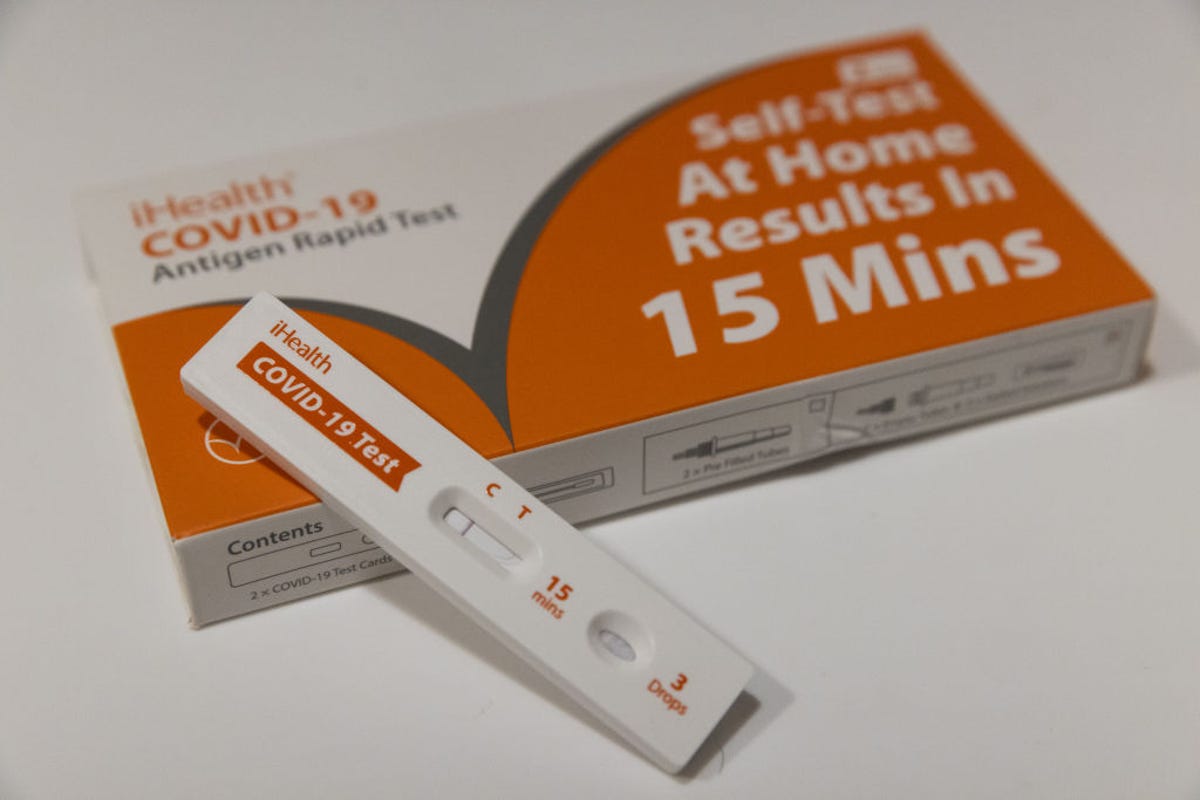
No, there isn't an option to choose which brand of test you will receive. All tests are rapid antigen tests authorized by the Food and Drug Administration, like iHealth.

When will the test kits arrive? 

Tests are typically sent out within seven to 12 days of an order being successfully placed and are delivered by the USPS within one to three days of shipping.

COVID 19 test kit

iHealth COVID-19 rapid antigen tests are supplied for free via USPS.

Angus Mordant/Getty Images

What if I haven't received my first or second batch of test kits?

The USPS says its site has had some difficulties recognizing certain residential addresses, especially apartment buildings, multifamily homes and residences connected to commercial properties. 

If you have had issues placing an order, you can file a service request online or call the USPS Help Desk at 800-ASK-USPS.

Is it OK to use a test kit that was left outside?

According to the FDA, manufacturers have ensured that the tests remain stable at various temperatures, "including shipping during the summer in very hot regions and in the winter in very cold regions."

But a test may be damaged by being left outdoors in freezing temperatures or being used immediately after being brought inside from freezing temperatures. 

The ideal temperature to store rapid antigen COVID-19 test kits is between 59 and 86 degrees Fahrenheit. 

The FDA has warned about the effect of extreme heat on COVID tests, saying that, "long exposure to high temperatures may impact the test performance," but also recommends simply confirming the test line on the kit. 

"As long as the test line[s] appear as described in the instructions, you can be confident that the test is performing as it should," the FDA site says.

The information contained in this article is for educational and informational purposes only and is not intended as health or medical advice. Always consult a physician or other qualified health provider regarding any questions you may have about a medical condition or health objectives.


Source

Tags:


How Healthy is Your Heart? Find Out at Home Without Any Equipment


How Healthy is Your Heart? Find Out at Home Without Any Equipment

Your heart plays a key role in your body, delivering oxygen to every other organ and keeping you alive. That's why it's so important to be heart healthy in every sense of the word, from your blood pressure to your cholesterol levels and more. While some heart health metrics are best left to professionals, others can be checked easily at home. 

Staying up to speed on your heart health can help you avoid any issues, or catch them early. Heart disease is the leading cause of death for most racial and ethnic groups in the US, per the US Centers for Disease Control and Prevention, and someone in the US has a heart attack every 40 seconds.

To be clear, we do recommend regularly getting your heart checked out by a pro. But in the meantime, there are ways to monitor your own heart health yourself, right in the comfort of your home, without any special devices -- you just need a few minutes and a bit of math.

Here are two easy ways to measure your heart health at home without equipment. Plus, learn the most common signs and symptoms of heart problems to look out for.

Try the stairs test

A person runs up a set of stairs outside
MStudioImages/Getty Images

Do you get out of breath while walking up the stairs? One 2020 study by the European Society of Cardiology found that you can assess your heart health by timing how long it takes you to ascend four flights of stairs. 

"If it takes you more than 1½ minutes to ascend four flights of stairs, your health is suboptimal, and it would be a good idea to consult a doctor," explains study author Dr. Jesús Peteiro, a cardiologist at University Hospital A Coruña, Spain.

The study compared the results of the stairs test and more in-depth medical tests of heart health, like a treadmill test. They found some overlap -- 58% of patients who took longer than 1½ minutes to complete the stairs test had "abnormal heart function during the treadmill examination," per the study. People who took less time to ascend the stairs also had higher exercise capacity, which in turn is linked with a lower mortality rate.

Dr. Peteiro also authored a 2018 study in which over 12,000 participants walked up three flights of stairs. Those who weren't able to do it quickly were nearly three times more likely to die from heart disease over the next five years (3.2% compared to 1.7%).

Notably, both studies only looked at people with symptoms of coronary artery disease. But Dr. Peteiro said that, when it comes to measuring exercise capacity, the stairs test should work similarly in the general population. And various types of step tests have long been used by medical professionals to assess heart and lung fitness.

Check your heart rate

A woman checks her pulse
Lord Henri Voton/Getty Images

Your heart rate, also known as your pulse, is a basic measurement of heart health, which is why your doctor or nurse often listens for it during check-ups. It's easy to measure at home with no equipment and offers useful information about your heart and overall fitness.

Your heart rate naturally changes throughout the day, depending on how much you're exerting yourself. During moments of high stress or intense physical exertion, for example, your heart beats faster. When you're relaxed or asleep, it beats more slowly.

There are two types of heart rate you can measure at home: resting heart rate and maximum heart rate. First, we'll go over what each one means. Then we'll explain how to measure.

Resting heart rate

Your "resting heart rate" is your pulse at rest, when you're relaxed and still. Research shows that higher resting heart rates, are linked with lower physical fitness, higher blood pressure, and an increased risk of heart attack and death.

What's "low" or "normal" varies a bit by the individual. In general, healthy adult heart rates range from 60 to 100 beats per minute, but ranges also depend on age. Here are the target resting heart rate ranges for various age groups:

Age

Target Resting Heart Rate 

20 years

100 - 170 beats per minute (bpm)

30 years

95 - 162 bpm

40 years

90 - 153 bpm

50 years

85 - 145 bpm

60 years

80 - 136 bpm

70 years

75 - 128 bpm

Maximum heart rate

In addition to your resting heart rate, you can also measure your heart rate during exercise. This gives you an idea of how fast your heart beats when it's working extra hard, and how close it is to your "maximum heart rate" -- the highest that your heart rate should ever go. To get your maximum heart rate, subtract your age from 220.

In this case, lower isn't necessarily better. During moderate-intensity physical exercise, you should aim to get between 64% and 75% of your maximum heart rate, per the CDC. And during vigorous-intensity exercise, your should be between 77% and 93% of your maximum heart rate.

Your maximum heart rate has to do with how much aerobic capacity your body has. Studies have found that higher aerobic capacity is associated with less likelihood of heart attack and death, Harvard Health reports.

How to measure your heart rate at home

There are a few places on your body where you can feel your pulse. One common and easily accessible location is the radial artery, or your wrist. 

Simply put your index and middle finger on the inside of the opposite wrist, and count the number of heartbeats you feel in 15 seconds. Multiply that number by four to get your heart rate in beats per minute. (Start the count on a beat, which is counted as zero.)

The best time to measure your resting heart rate is in the morning when you wake up, while you're still in bed. 

To measure your heart rate during exercise, you'll have to pause briefly in the middle of exercising to measure your pulse. You can also use a heart rate monitor or fitness tracker, if you have one (the most accurate measurements come from a chest-strap heart rate monitor).

Know the sneaky signs of heart disease

A man with a beard with his hands over his heart
ljubaphoto/Getty Images

Many people with cardiovascular diseases go undiagnosed until it's too late. Here are some of the most common symptoms of heart attack, heart disease, heart failure and other urgent cardiovascular health concerns to look out for, courtesy of the Mayo Clinic.

  • Chest pain, tightness
  • Shortness of breath
  • Swelling in the hands, legs, ankles or feet
  • Upper back or back pain
  • Rapid or irregular heartbeat (or palpitations)
  • Changes in heart rhythm
  • Weakness or dizziness
  • Numbness in the legs or arms
  • Lightheaded or dizziness
  • Fatigue or weakness during physical activity
  • Heartburn, nausea or vomiting
  • Fainting

The information contained in this article is for educational and informational purposes only and is not intended as health or medical advice. Always consult a physician or other qualified health provider regarding any questions you may have about a medical condition or health objectives.


Source

Tags:


9 great reads from CNET this week: Tech fails, NFTs, Marvel and more


9 great reads from CNET this week: Tech fails, NFTs, Marvel and more

Every year has its ups and downs. The ups are a thrill. The downs are often fascinating, for what they reveal about the limits of our ambitions, the challenges of trying to get things right and the escape hatches that might get us out of trouble (or the rabbit holes that take us ever deeper).

Or just because misery loves company. At this time of year, we regularly take a look back at the craziness that unfolded in the world of technology. There were notable slipups and outbreaks of weirdness, which CNET news chief Roger Cheng has chronicled in his wrapup story; I particularly liked his use of the term "an iceberg of terrible" in describing all the trouble that accumulated around Facebook/Meta in 2021.

That story is among the many in-depth features and thought-provoking commentaries that appeared on CNET this week. So here you go. These are the stories you don't want to miss.

Commentary: This year included more vaccine misinformation, random internet outages and yet another T-Mobile data breach. 

A grim year in tech
Robert Rodriguez/CNET

"I could just right click and save that NFT" isn't an argument anymore. 

Richerd NFT
Richerd/OpenSea

Commentary: I'll never again take safety technology for granted.

Front end of a Prius after a collision
Kent German/CNET

Parag Agrawal, the new CEO, will have his hands full.

Twitter CEO Parag Agrawal
Twitter

Disney Plus became indispensable entertainment this year, with WandaVision, The Falcon and the Winter Soldier, Loki, What If...? and Hawkeye appearing at a steady clip.

Tom Hiddleston as Loki
Marvel

Critics fear new tools to help those struggling with body image are just a drop in the bucket.

A girl uses her phone
Getty Images

If someone asks for payment in the form of a gift card, just say no.

Gift cards fanned out
Sarah Tew/CNET

Our work and our lives may never return to a pre-pandemic normal, and that's caused some major shifts in where people are choosing to live in the US. 

Map of the US showing outmigration from California
CNET

Gigi Sohn, a longtime consumer advocate and former FCC official, faced Republican opposition at her Senate confirmation hearing.

Gigi Sohn
Andrew Harrer/Bloomberg via Getty Images

Source

Tags:


Lenovo ThinkPad X1 Titanium Yoga review: A first-class 2-in-1 for business travelers


Lenovo ThinkPad X1 Titanium Yoga review: A first-class 2-in-1 for business travelers

The X1 Titanium Yoga is the thinnest ThinkPad ever. At 11.5 millimeters (0.45 inch) and with a 13.5-inch 2K-resolution 450-nit display with a 3:2 aspect ratio, it doesn't take up much more space in a backpack than a spiral-bound single-subject notebook. It also weighs just 2.5 pounds (1.1 kilograms), which is barely more than the X1 Nano, Lenovo's lightest ThinkPad to date at 2 pounds (907 grams). Despite the thin-and-light frame, though, the X1 feels solid enough to hold up to being banged around on flights or an everyday transit commute. And that tall screen means you're getting more vertical space to work but the laptop is no wider than a 13.3-inch laptop. My point is, this is a great design for frequent business travelers and I didn't even mention all the privacy and security features yet. The X 1 Titanium Yoga is a first-gen model, however, and while it's good, there's some room for improvement.

Like

  • Thin, strong 2-in-1 body
  • High-quality 3:2 display
  • Lots of security and privacy features
  • Lenovo Precision Pen included

Don't Like

  • Performance, battery life are nothing special for the price

Prices for the ThinkPad X1 Titanium Yoga currently start at $1,355, £1,670 in the UK and AU$2,949 in Australia. The configuration I tested, which you can see in the chart below, is $1,440, which is more than reasonable for what you're getting. But that's the price as I'm writing this. A few days ago it was $2,147, making this a much more difficult laptop to recommend. Needless to say, if you're interested in buying this laptop, you'll want to look for a sale or contact Lenovo directly to get the best pricing.  

Business laptops are typically more expensive than consumer models, though, because of things like better security and remote IT features, repairability and greater durability. For the X1 Titanium Yoga that means a Mil-Spec-tested chassis constructed of titanium and carbon fiber for the lid and magnesium-aluminum alloy on the bottom; a match-on-chip fingerprint reader (the biometric info is stored on the reader, not the computer) with anti-spoofing technology; and an IR camera for facial recognition. The BIOS is self-healing, too, meaning it can repair itself from a backup in case of a malicious attack or a failed or interrupted update. 

Lenovo ThinkPad X1 Titanium Gen 1

The titanium lid is new to ThinkPads. 

Josh Goldman/CNET

The X1 Titanium Yoga also has an ultrawideband radar sensor that can tell when you walk away from it and quickly lock the laptop. It can also sense when you return and automatically wake and unlock it. Called Human-Presence Detection, it's simultaneously awesome and a tad creepy. This setting and many more can be controlled through the laptop's Commercial Vantage app. 

In the app, you'll find everything from battery and power settings to audio tweaks for its mics and speakers to turning on and off the keyboard's various hotkeys. As you might expect, the controls are designed to improve your work experience, such as setting the laptop's mics -- there are four of them -- and speakers to improve your VoIP call quality while also suppressing keyboard noise. 

Lenovo ThinkPad X1 Titanium Yoga

Price as reviewed $1,440
Display size/resolution 13.5-inch 2,256x1,504-pixel touch display
CPU 2.1GHz Intel Core i7-1160G7
Memory 16GB 4267MHz LPDDR4X (onboard)
Graphics 128MB Intel Iris Xe Graphics
Storage 512GB PCIe NVMe SSD
Networking 802.11ax wireless, Bluetooth 5.1
Connections Thunderbolt 4 USB-C (x2), 3.5mm audio jack
Operating system Windows 10 Pro (2H02)

There are always trade-offs when you make a laptop this thin and light but Lenovo manages to keep things comfortable. For instance, it has a 13.5-inch display that gives you some extra vertical room to work compared to a 16:9 display. Also, its 2K resolution is a fair compromise between full HD and 4K, and it can hit a 450-nit brightness level (for working in bright conditions) and covers 100% of the sRGB color gamut. The display looks good right out of the box. 

Lenovo ThinkPad X1 Titanium Gen 1

The keyboard is good, but the haptic touchpad needed some adjustment.

Josh Goldman/CNET

Also, despite its thinness, the keyboard is comfortable. I've seen user complaints about how this model's keyboard isn't as good as past ThinkPads and to some extent that's true. However, those better keyboards were in far thicker bodies. Again, given what Lenovo was working with here, it's a good keyboard. 

The touchpad, on the other hand, could be better. It's small, partly because this model has the familiar ThinkPad TrackPoint nub and its associated mouse buttons above the touchpad. It also matches the display ratio, so it's simply not that wide. Lenovo also used a haptic touchpad made by Sensel that eliminates moving parts but also means the click is simulated. The out-of-the-box settings caused me some frustration with tracking and click detection. But the touchpad has its own control panel, and once I adjusted it some, it worked just fine. 

Lenovo ThinkPad X1 Titanium Gen 1

The laptop's body is barely thicker than the included active pen. 

Josh Goldman/CNET

The port assortment on the X1 Titanium Yoga is limited to two Thunderbolt 4 USB-C ports and a 3.5mm headset jack -- though Thunderbolt 4 handles all your connection needs and power with a single cable and the right USB-C hub. Plus, it charges fast using Thunderbolt 4, too, but I wish the two ports were split up so you could charge from the left or right. Speaking of charging, battery life is a little disappointing at 9 hours, 29 minutes on our streaming video test. 

This laptop isn't quite the workhorse you might expect for a premium device either -- a cost of being so thin, perhaps -- but it is snappy for typical office productivity. Like the X1 Nano, the value in the X1 Titanium Yoga is in its durable lightweight design, high-quality display and all those extra features that make it easier to pick up and start using fast. Not to mention the security and privacy options. Also, the two-in-one design gives it an edge over the Nano, in my opinion, so if you're choosing between the two, the Yoga wins. 

Lenovo ThinkPad X1 Titanium Gen 1

The X1 Titanium Yoga stays thin even in tablet mode. 

Josh Goldman/CNET

Source

Tags:


Plant Milks Ranked From Best to Worst: See How Your Favorite Fared


Plant Milks Ranked From Best to Worst: See How Your Favorite Fared

My mom was a devout soy milk drinker and my dad was a classic full-fat cow's milk guy when I was growing up. Now, cow's milk is practically a thing of the past. Well, not quite. But cow's milk consumption has decreased by almost 21% since 2010 as Big Dairy has taken some major heat, with reports of poor animal conditions, health-related consequences and environmental impact becoming public knowledge. 

The slow decline of cow's milk has revealed a wealth of lucrative opportunities: creating milk substitutes from virtually anything. There are milk options for people who are dairy-free, gluten-free, soy-free and nut-free. Alternative milks are the most popular plant-based product in the US, outpacing industry-leading meat alternatives Beyond and Impossible Foods. And it seems like plant milk growth will continue. Retail sales of milk alternatives are expected to increase by almost $1 billion dollars by 2025.

Plant milks aren't just for vegans or folks with dietary restrictions. With the help of colleagues in CNET's San Francisco and Charlotte, North Carolina, offices, I pitted eight plant-based beverages against each other to see which one would reign supreme. Please note that this test was not scientifically airtight, and I am not a milk expert by any means. These results are based solely on my opinions and those of my colleagues.

Glasses, plant milk cartons and cookies used for a taste test.

The alt-milk taste-test station in Charlotte.

MaryBeth Monaco-Vavrik/CNET

Here's how my CNET colleagues voted

To figure out which alternative milk was the best, we performed two office taste tests of eight different milks in our San Francisco and Charlotte locations. Again, these tests were not highly scientific -- in San Francisco, we measured oat, almond, soy, coconut and pea drinks, while in Charlotte, we tested hemp instead of pea. Everyone tasted the milks one at a time and offered their thoughts about the texture, taste, consistency and aftertaste.

Here are the estimated survey results from 33 colleagues across both offices from the alt-milk taste test.

How I ranked the top 5 alternative milks

For my own taste test, I tasted each milk individually, and also tried them mixed in coffee. Here are my picks for the top five alt-milks I tried. 

5. Coconut: So Delicious Unsweetened 

A carton of coconut alt-milk.

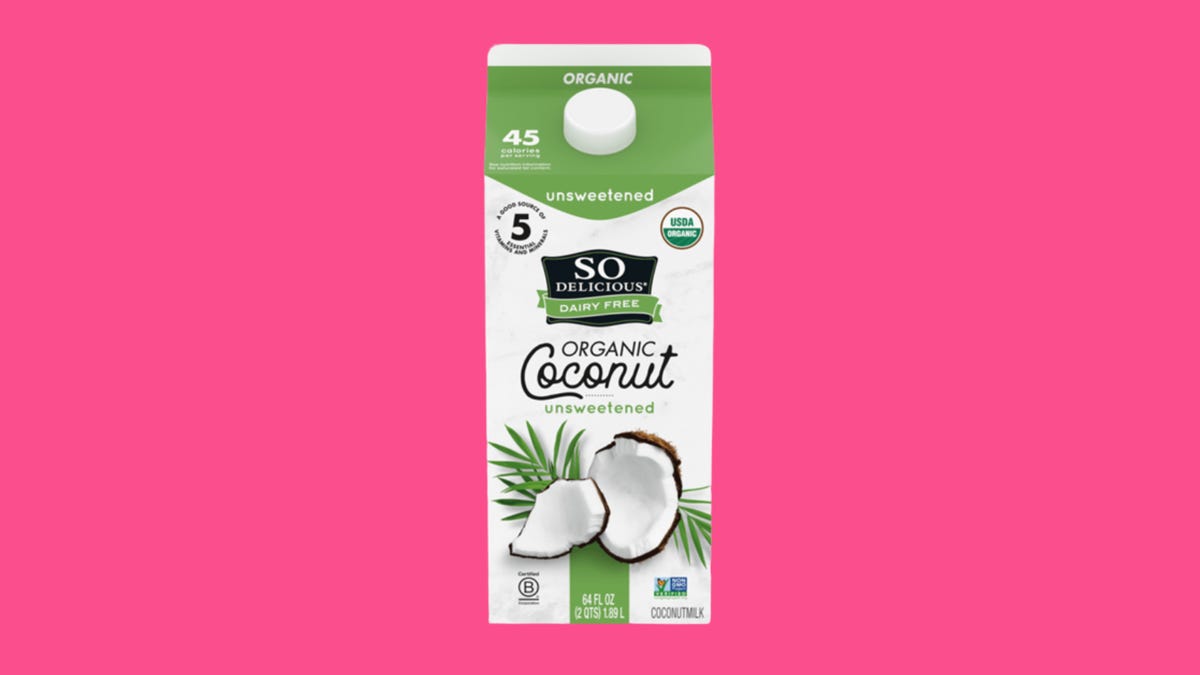
So Delicious' Unsweetened Coconut Milk is pleasing to the eye but not the tastebuds.

CNET

Coming in dead last in my taste test was So Delicious' Coconut Milk, which should be renamed for false marketing. The milk, while most similar to dairy's texture, was uncomfortably thick and flavorless. This is essentially just milky water. Or watery milk. Regardless, I will never drink this again.

In coffee: The coconut milk watered down the coffee while adding no flavor.

4. Almond: Califia Unsweetened 

A carton of almond alt-milk.

Califia's Unsweetened Almond milk is just okay.

CNET

Though almond milk is usually my favorite, this one was pretty tasteless. There was an initial burst of almond flavor that dulled into a light coating and lingering aftertaste. The consistency was thin, though smooth. This milk is good if you're just adding it for smoothies, but on its own, this one was just OK. 

In coffee: The almond milk left a slightly bitter aftertaste while also watering the coffee down. Thumbs down.

3. Hemp: Pacific Foods Unsweetened

A carton of hemp alt-milk.

Pacific Foods Unsweetened Hemp milk was surprisingly tasty.

CNET

While my colleagues reacted poorly to this milk's grainy, gritty consistency and slimy texture, I enjoyed it. This was my first time tasting hemp milk, and it was a pleasant surprise. The texture was thicker than both the coconut and almond milks, and I personally thought the earthy flavor was nice.

In coffee: This is where the grainy texture became a problem. The hemp milk was not great in coffee and did not add any sweetness. The consistency wasn't thick enough to blend well with the coffee, leaving it watered down.

2. Soy: Silk Unsweetened

A carton of soy alt-milk.

Silk's Unsweetened Soy milk is a worthy dairy milk opponent.

CNET

Although the soy milk didn't have much flavor on its own, its astounding performance when it came to coffee was what made the difference. The consistency was the most similar to that of cow's milk, and it has a similar nutritional profile. If you're looking for the closest replacement for cow's milk, this is it. 

In coffee: The creamy, thicker consistency of the soy milk blended perfectly into the coffee. It added natural sweetness and a mild vanilla aftertaste. This is definitely my favorite pick to add to coffee.

1. Oat: Planet Oat Unsweetened

A carton of oat alt-milk.

Planet Oat's Unsweetened Oat milk reigned supreme.

CNET

Oat milk has surged to fame in recent years and now maintains a cult following, and I can see why. It's naturally sweet but not overly so. It has a smooth texture, and it's not bland. While this plant milk is thin in consistency compared to cow's milk, it doesn't leave any weird aftertastes and doesn't coat the mouth. 

One note here: We tested Planet Oat for this story, but many of my colleagues insisted Oatly was even better. I definitely underestimated how seriously people take their oat milk brand loyalty.

In coffee: The oat milk was less sweet than the soy milk, but even so, the consistency was thick and smooth enough to complement the coffee's texture without watering it down.

Honorable mentions

We tested a few additional plant milks. Here are some notes about them:

  • Ripple Pea: This milk can only be described as weird and too sweet on its own, but it was delicious in coffee. I know, it surprised me too.
  • Good Karma Flax: This tasted like watered down powdered milk. 
  • Elmhurst Cashew: I have never tried an alt-milk that tasted so much like what it's made from. This milk is only pleasant if you love cashews in liquid form.

Thousands of years of plant-based milk

Despite their recent explosion into the mainstream, plant-based milks have been around for thousands of years. It's easy to forget, but at least 70% of the world is lactose intolerant to some degree, said Christopher Gardner, professor and director of nutrition studies at the Stanford Prevention Research Center. 

For example, soy milk has been prepared in China since 1365 and almond milk was around in the Middle East since the 13th century. Coconut milk has also been popular for centuries in Southeast Asian countries, said registered dietitian and nutritionist Vandana Sheth, author of My Indian Table: Quick & Tasty Vegetarian Recipes.

Environmental impact: Are alt-milks better than dairy?

Even though almond milk has had a bad rap for the amount of water required to produce it, cow's milk still has significantly higher impacts on the environment across all metrics than any plant-based alternatives, according to Stanford's Gardner. Cow's milk produces around three times as much greenhouse gas emissions; uses around 10 times as much land and 2 to 20 times as much freshwater; and generates much higher levels of eutrophication -- excess plant growth due to fertilizer runoff -- according to research done by Hannah Ritchie, who holds a doctorate in Geosciences from the University of Edinburgh, for Our World in Data.

"Plant-based milks are an easy switch to make; they're cheaper than dairy and don't taste that different," Gardner said. If you're looking for an easy way to reduce your environmental footprint, all plant milks are generally better for the environment than cow's milk, he added. 

The bottom line

When it comes to deciding which milk alternative to choose, you're the person who best knows your own nutritional needs. If you're looking for a milk that provides a good source of protein, for example, choose soy, pea or flaxseed milk, said Sheth. If you're concerned about high blood sugar and want a milk lower in carbs, consider almond milk or macadamia nut milk -- another rising plant milk star.

Soy, almond, cashew, coconut and rice milk might be a better option if you have chronic kidney disease since they have a lower potassium and phosphorus content compared to dairy milk. According the National Institute of Diabetes and Digestive and Kidney Diseases, people with chronic kidney disease may want to avoid foods high in potassium and phosphorus. If you have health concerns, be sure to check with your doctor or a nutritionist before switching to any plant milk.

The good news is most plant milks, no matter what they started out as, are fortified with many of the vitamins and minerals people are looking for, such as calcium or vitamin A, said Gardner. 

At the end of the day, everyone has their own preferences. You don't have to agree with my rankings, but I hope this inspired you to enjoy a glass of your favorite plant milk with a warm chocolate chip cookie and some friends. 

The information contained in this article is for educational and informational purposes only and is not intended as health or medical advice. Always consult a physician or other qualified health provider regarding any questions you may have about a medical condition or health objectives.


Source

Tags:

Search This Blog

Menu Halaman Statis

close